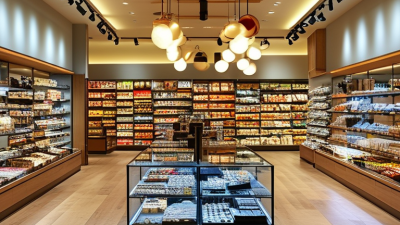
Top Retail Store Lighting Manufacturers in China
Retail Store Lighting shapes how shoppers notice products, judge colors, and move through a store. A bright display can draw attention, while softer light can make fitting areas feel calmer. Yet good lighting is not simply about adding more fixtures. Glare, uneven brightness, and inaccurate color can undermine even a carefully planned interior. Small details matter.
Lighting designer Randall Whitehead is often quoted as saying, “Light is the magic ingredient that makes or breaks a space; it is one of the most important elements in all my designs.” His observation offers a useful lens for comparing manufacturers. Buyers need to look beyond polished product photos. Beam angles, color consistency, dimming compatibility, heat management, and documented performance all deserve attention. A sample fixture should be tested in the actual space, where ceiling height and surface finishes change what the light does.
China’s manufacturing landscape includes suppliers focused on track lights, downlights, linear systems, and custom retail solutions. This guide examines leading names through their product ranges, engineering capabilities, quality controls, customization options, and export experience. It also considers how clearly each company provides technical documents and support. These checks do not guarantee a perfect match. They make comparisons more grounded.
There is a limitation worth admitting: a strong catalog cannot reveal every detail of factory consistency or after-sales service. Retailers should request current specifications, sample products, and references before making major orders. The right partner depends on the store, the budget, and the installation plan—not just a low quoted price.
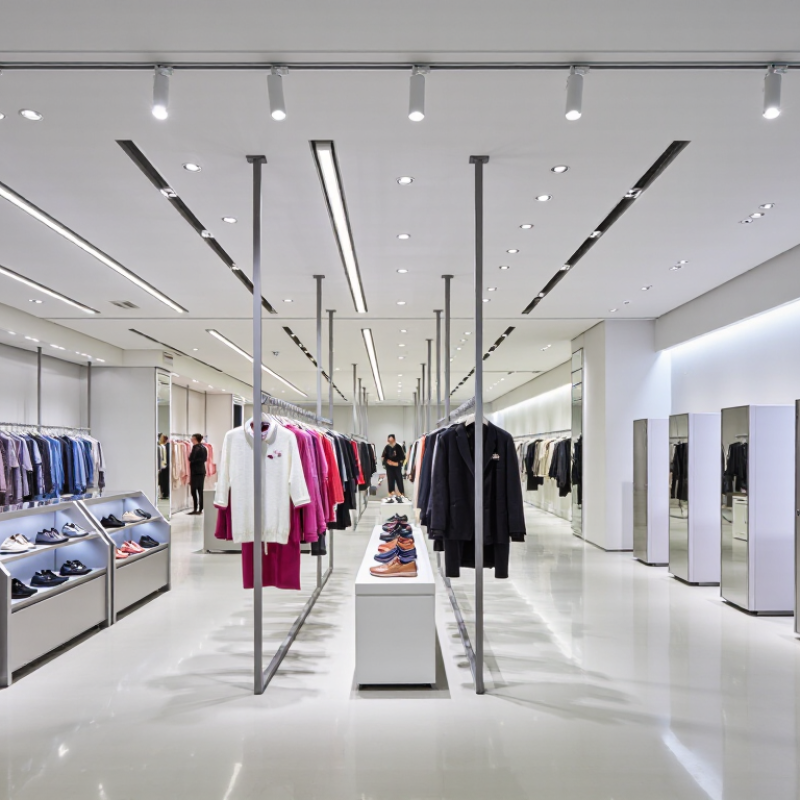
Overview of China's Retail Store Lighting Industry
China’s retail store lighting industry is shaped by a broad manufacturing base, established component supply chains, and demand for energy-efficient LED systems. Suppliers produce track lights, linear fixtures, downlights, display case lighting, and custom fittings for different store formats. In a fashion shop, a narrow beam can bring texture out of a dark coat; in a supermarket, even illumination helps shoppers read labels across long aisles. Details matter.
Projects increasingly combine lighting with dimming controls and adjustable color temperature. Yet a specification sheet alone cannot show how a fixture performs above a glossy counter or beneath a low ceiling. Buyers and designers should review beam angles, color consistency, glare control, heat management, and verified photometric data. Samples help. So do on-site mock-ups, especially where merchandise colors must look natural.
China’s production capacity can support varied order sizes and customization, but quality and service may differ between factories. Lead times, replacement parts, and warranty procedures deserve clear discussion before a project begins. Some lighting plans still prioritize fixture price over visual comfort. That trade-off can become obvious after installation, when reflections appear on glass or bright spots distract customers. Industry growth is real, but dependable results still require careful testing and communication.
How to Evaluate Retail Store Lighting Manufacturers
Choosing a retail store lighting manufacturer starts with evidence, not catalog images. Ask for IES-format photometric files, product test reports, warranty terms, and documented quality checks. Compare efficacy, color consistency, glare control, and dimming performance against your store’s needs. A bright sample alone proves little. Test it in a real aisle, beside the merchandise it must illuminate.
EIA’s 2018 Commercial Buildings Energy Consumption Survey attributes about 17% of U.S. commercial-building electricity use to lighting. That makes fixture efficiency and controls worth checking, not just the purchase price. The U.S. Department of Energy’s Energy Saver guidance says LEDs use at least 75% less energy and can last up to 25 times longer than incandescent lighting. Treat those figures as a broad comparison, not a guaranteed saving for every retail project. Ask manufacturers to show calculations based on your operating hours and existing fixtures.
Review how each supplier handles color rendering, flicker, heat, and replacement parts. Request a mock-up with the intended ceiling height and shelf layout; a showroom sample can flatter a product. Check whether measurements come from an independent laboratory and whether production batches are checked consistently. Small details matter. Ask who handles failures, how quickly drivers can be replaced, and whether lead times are confirmed in writing. Specifications can look excellent, yet one uneven aisle may still undermine the result.
Leading Retail Store Lighting Manufacturers in China
Leading retail store lighting manufacturers in China compete on more than price. For showroom projects, buyers should inspect optical design, thermal control, driver quality, and documented testing. A narrow beam can sharpen a cosmetics display, while poor glare control makes glossy packaging uncomfortable. The International Energy Agency reports that lighting uses about 15% of global electricity and produces roughly 5% of global greenhouse-gas emissions (IEA, “Lighting,” 2023). Efficiency and maintenance life are practical buying criteria, not brochure extras. Small details matter.
A 2019 U.S. Department of Energy forecast examined solid-state lighting. It projected annual U.S. LED savings of 569 TWh by 2035. This is a forecast, not a measured result. Compare sample-room measurements with installed results: shelf-level illuminance, color consistency, flicker, dimming range, and warranty terms. Ask for photometric files, test reports, and a pilot installation. A polished sample can hide problems. Controls integration is often less tidy than catalogs suggest, so confirm compatibility before rollout. Chinese manufacturers may offer customization and production scale, but neither guarantees consistent batches. A small production run can reveal color shifts between luminaires.
Products and Technologies for Retail Store Lighting
Retail lighting products must do more than make shelves bright. Track-mounted spotlights can reveal texture on produce and clothing, while linear fixtures create even light across long aisles. For fresh goods and changing displays, adjustable optics and dimming help staff shape the scene without replacing fittings. Good light sells quietly.
Color quality matters. A high color-rendering index can help shoppers judge fabric shades and food appearance, but glare can still make a polished floor uncomfortable. Ask manufacturers for photometric files, flicker data, and thermal test results, then check samples at realistic mounting heights. Small details matter. The U.S. Department of Energy’s LED Lighting Facts guidance reports that LEDs use at least 75% less energy and can last up to 25 times longer than incandescent lamps. The comparison is useful, though it does not predict savings against every existing store system.
Controls add another layer. Dimming, time schedules, and occupancy sensors suit stockrooms and quieter zones; sales-floor settings need careful commissioning to avoid uneven brightness. The IEA’s Energy Efficiency 2023 report estimates lighting accounts for about 15% of global electricity use, underscoring the value of efficient design. Still, controls are not automatically simple. A poorly tuned sensor can leave a fitting dim when staff need clear visibility. Chinese suppliers may offer integrated luminaires, drivers, optics, and control options; buyers should compare measured output, warranty terms, and sample performance, not just catalogue claims.
Top Retail Store Lighting Manufacturers in China - Products and Technologies for Retail Store Lighting
| Product Category | Typical Retail Applications | Common Lighting Technologies | Key Selection Considerations | Controls and Installation |
|---|---|---|---|---|
| LED Track Spotlights | Feature displays, mannequins, shelving, and merchandise that requires directional emphasis. | LED light sources with reflector or lens optics; adjustable beam angles and rotatable or aimable heads. | Check beam spread, glare control, color rendering, output, and compatibility with the track system. Higher color-rendering options are commonly specified where accurate product colors matter. | Mounted on compatible track systems; dimming and track compatibility should be confirmed for the selected fixture and driver. |
| LED Linear Lighting | Continuous illumination over aisles, shelving, checkout areas, and merchandising zones. | Linear LED modules in suspended, surface-mounted, or recessed luminaires; direct or direct/indirect light distribution. | Consider uniformity, glare, mounting height, fixture spacing, and whether the light distribution suits the aisle or shelf layout. | Can be installed as individual fixtures or continuous runs. Dimming and sensor controls depend on the driver and control system. |
| LED Downlights | General illumination in fitting rooms, corridors, checkout areas, and ceiling-grid retail spaces. | Recessed LED luminaires with reflector or lens optics; fixed and adjustable versions are commonly available. | Review cutout dimensions, ceiling depth, beam angle, glare, color consistency, and whether the fixture is suitable for the ceiling type. | Typically recessed into a prepared ceiling opening. Dimming performance depends on the driver and the installed control method. |
| LED Panel Lights | Broad, even ambient lighting in stores with suspended or modular grid ceilings. | Flat LED panels using diffusers and internal optical designs to spread light across the emitting surface. | Compare panel dimensions, light distribution, glare, color appearance, and compatibility with the ceiling grid or suspension method. | Available for grid, surface, or suspended installation, depending on the product design. Controls and dimming are model-dependent. |
| LED Cabinet and Shelf Lights | Display cabinets, product shelves, counters, and niche merchandising areas. | Compact linear LED bars, strips, or miniature fixtures; some designs include diffusers to soften visible points of light. | Check fixture size, light distribution, heat management, wiring access, and the risk of reflections on glass or glossy packaging. | Often installed within or beneath shelving and cabinetry. Power supplies, connectors, and switching arrangements should be planned with the display layout. |
| LED High-Bay Luminaires | Large retail spaces with high ceilings, including warehouse-style stores and bulk merchandise areas. | High-output LED fixtures with reflector or lens optics designed for mounting at greater heights. | Selection depends on ceiling height, required light distribution, mounting position, glare, and the desired illumination on floor and merchandise surfaces. | Commonly suspended or mounted to a suitable structure. Occupancy sensors and dimming can be used when supported by the fixture and control system. |
Product configurations and performance vary by model. Confirm photometric data, electrical compatibility, installation requirements, and applicable safety certifications before specifying fixtures.
Market Trends and Purchasing Considerations
Retail lighting in China is shifting toward efficient LEDs, flexible optics, and controllable color temperatures. These options help stores refresh displays without replacing every fixture. A narrow beam can highlight a watch case, while a wider beam makes a clothing aisle feel more even. Light matters. Yet trendy controls are not automatically useful; staff need simple settings that work during busy shifts.
Tips: Ask for a sample fixture and its photometric report. Check color rendering, glare, flicker, and output at the actual mounting height. Test it over real merchandise, not just a showroom wall. Compare driver access and replacement parts, too. A low purchase price can become less attractive when service is difficult.
When comparing manufacturers, review thermal design, production consistency, warranty terms, and lead times alongside quoted efficiency. Request the same specifications from each supplier so the comparison stays fair. For larger projects, a small trial installation can reveal uneven brightness or color differences between batches. Smart dimming and tunable white light may support changing layouts, but compatibility should be confirmed before ordering. I have seen buyers focus heavily on wattage; that number alone says little about how inviting a store will look.
Related Posts
-
2026 Best Retail Store Lighting Types for Global Buyers
-
10 Retail Store Lighting Tips to Boost Sales
-
How to Choose Retail Lighting for Global Stores in 2026?
-
10 Best Retail Lighting Suppliers for Global Buyers
-
What Are the Top China Showroom Lighting Suppliers?
-
Maximize Retail Sales with Innovative Store Lighting Solutions Boosting Customer Experience