
2026 Best Retail Store Lighting Types for Global Buyers
Choosing the right Retail Store Lighting can influence customer comfort, product appeal, energy use, and operating costs. In 2026, global buyers face more choices than ever, from LED track lights and linear systems to smart controls and display-focused spotlights. However, the brightest option is rarely the best option.
A reliable lighting plan begins with the store’s purpose. A fashion boutique may need high color rendering for fabrics and skin tones. A grocery store may require even illumination across aisles, shelves, and checkout areas. Jewelry displays often need precise beams, controlled glare, and carefully selected color temperatures. Small details matter. A poorly aimed spotlight can create harsh reflections on glass. Excessive brightness can make customers leave sooner.
This guide examines leading lighting types, performance specifications, installation factors, and sourcing considerations for international buyers. It considers lumen output, CRI, beam angle, flicker, dimming, lifespan, maintenance, and compatibility with local electrical requirements. Product certifications and test reports should be checked before purchase. Supplier claims need evidence.
There is no universal solution.
Experience from commercial projects shows that lighting plans often change after a physical store trial. A product may look excellent in a catalog, yet feel too cool under real ceiling heights. Initial assumptions can fail. Buyers should request samples, review photometric data, and test lighting beside actual merchandise. Budget remains important, but long-term reliability deserves equal attention. The strongest decision balances visual quality, safety, efficiency, serviceability, and regional compliance.
Retail Store Lighting Fundamentals and Key Performance Criteria
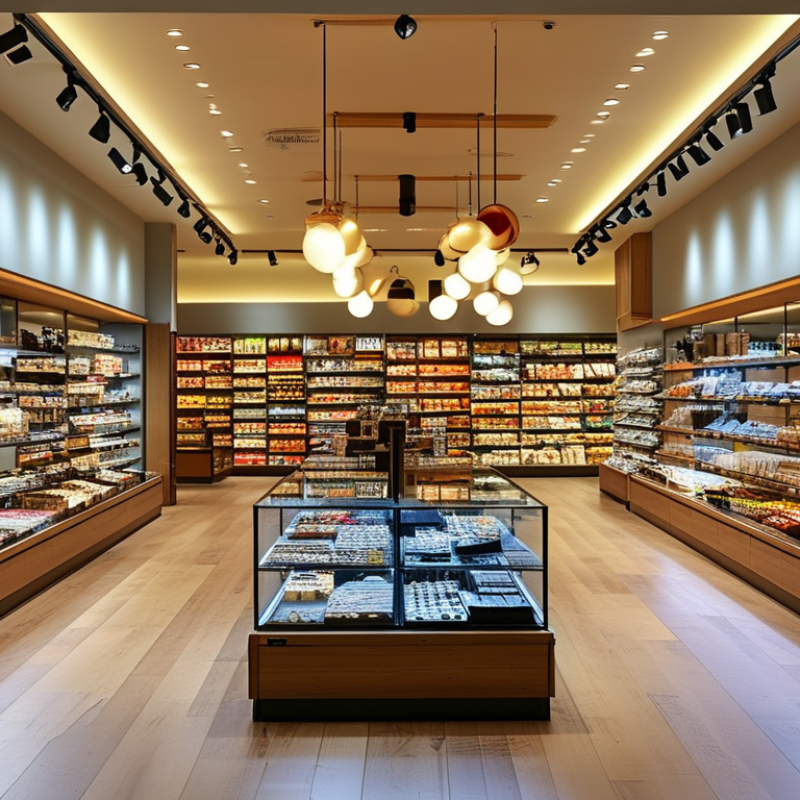
Retail store lighting begins with the customer’s visual journey, not with fixture selection. Ambient lighting establishes comfortable brightness across aisles and checkout areas. Accent lighting directs attention toward displays, new arrivals, and textured products. Task lighting supports detailed work at counters, fitting rooms, and service desks. Linear systems suit shelves, while adjustable spotlights create stronger visual focus.
Performance depends on measurable criteria. Illuminance should match the activity, with fewer dark patches across walking routes. High color rendering helps shoppers judge fabric, food, cosmetics, and surface finishes more accurately. Color temperature also matters; warmer light can feel inviting, while neutral white often improves product clarity. Glare must remain controlled, especially near glossy packaging and polished floors. Good uniformity reduces eye fatigue.
Energy efficiency is important, but wattage alone is not enough. Buyers should compare delivered lumens, efficacy, driver quality, dimming range, and expected maintenance life. Sensors and scheduled controls can reduce wasted energy in low-traffic zones. Check local electrical, emergency-lighting, and energy regulations before ordering globally. Requirements differ more than many purchasing teams expect. A low-cost fixture may become expensive after repeated replacements. I have seen attractive lighting plans fail because the ceiling height was ignored. That mistake is easy to repeat. Test samples inside the actual store, measure brightness at product level, and review the result under daylight and evening conditions. Small adjustments often matter.
Main Lighting Types for Different Retail Environments
2026 Best Retail Store Lighting Types for Global Buyers
Main Lighting Types for Different Retail Environments
Retail lighting should match the customer journey, product scale, and ceiling height. From project experience, supermarkets need broad, even ambient lighting. Linear LED systems reduce dark aisles and support clear product reading. Fashion stores often use track lighting and adjustable spotlights. These fixtures highlight fabrics, mannequins, and seasonal displays. However, excessive brightness can flatten colors and create uncomfortable glare. Electronics shops benefit from low-glare recessed lighting and controlled accent beams. This balance helps customers inspect screens without harsh reflections.
Small boutiques may use pendant fixtures for warmth and wall washers for visual depth. Jewelry counters require precise accent lighting with excellent color rendering. Fresh food areas need clean, neutral light that reveals texture without making products look artificial. Large warehouse-style retailers may need high-bay fixtures, but beam angles must suit shelf height. I once saw a well-lit store lose atmosphere because every zone used the same color temperature. That choice was efficient, but not thoughtful. Retail planning still needs testing.
Tips: Measure illuminance at shelf level, not only on the floor. Aim spotlights away from customer eye lines. Use separate controls for aisles, displays, and checkout areas. Check color rendering with real products before installation. Review shadows during busy hours. A layout may look perfect in drawings, yet feel tiring in practice. Allow adjustment after opening.
How to Match Lighting Types with Merchandise and Store Layouts
In 2026, retail lighting should begin with the merchandise, not the ceiling plan. The U.S. Department of Energy’s 2023 Solid-State Lighting R&D Opportunities report notes that LED source efficacy can exceed 200 lumens per watt. Efficiency matters, but brightness alone does not sell products. Use high-CRI, narrow-beam spotlights for jewelry, cosmetics, and premium displays. Their controlled beams create sparkle without washing nearby shelves. For clothing, choose wide, softer beams and neutral white light. This keeps fabric colors believable under changing store conditions.
Layout changes the lighting answer. Open aisles benefit from uniform linear systems that reduce harsh brightness gaps. Feature tables need adjustable track or recessed accent fixtures. Wall displays often require vertical illumination, helping customers read labels and compare packages. The Illuminating Engineering Society recommends evaluating glare, contrast, color quality, and visual comfort together, rather than chasing a single lux target. Keep customer sightlines clear. A dramatic shadow can become an annoying obstacle.
Energy performance should be measured across the whole store. The International Energy Agency reports that lighting has historically represented about 15% of global electricity use, making controls and efficient sources commercially significant. Add occupancy sensors in back rooms and daylight dimming near windows. Yet perfect calculations can still fail. A mock-up under real merchandise is essential. Test red fabric, glossy cartons, pale wood, and skin tones before final installation. Some stores may still choose too much light. It feels safe, but it can flatten displays, increase glare, and weaken the intended shopping atmosphere.
Energy Efficiency, Smart Controls, and Global Compliance Standards
Retail lighting now demands more than bright shelves and attractive displays. Energy efficiency is a purchasing priority for global buyers. The International Energy Agency reports that lighting uses about 15% of global electricity consumption. LED systems can reduce consumption substantially, but performance depends on design, installation, and maintenance.
Smart controls add measurable value. Occupancy sensors can dim lighting in empty aisles, while daylight sensors adjust output near windows. A Lawrence Berkeley National Laboratory review found that commercial lighting controls can deliver typical savings of 24% to 38%. The result is practical: fewer wasted hours and cooler ceiling spaces. Savings are not automatic. Poor sensor placement can frustrate staff and reduce customer comfort.
Compliance must be checked before shipment. Buyers should request testing for IEC 60598 safety requirements, IEC 61347 controlgear requirements, and EN 62471 photobiological safety. Electromagnetic compatibility, material restrictions, and local marking rules also vary by market. The U.S. Department of Energy’s solid-state lighting research reports show continuing gains in LED efficacy, yet higher output does not always mean better retail lighting. A narrow beam may create harsh reflections on polished packaging. A lower-glare layout can perform better, even when its specification sheet looks less impressive. Always verify measured lumen output, color consistency, emergency operation, and control compatibility through independent laboratory documents.
2026 Best Retail Store Lighting Types for Global Buyers - Energy Efficiency, Smart Controls, and Global Compliance Standards
| Lighting Type | Typical Retail Applications | Typical Efficacy | Recommended Color Quality | Energy and Maintenance Profile | Smart Control Compatibility | Key Global Standards and Certifications to Verify | Procurement Considerations |
|---|---|---|---|---|---|---|---|
| LED Linear Trunking | General illumination for aisles, supermarkets, hypermarkets, warehouses, and large-format stores. | Approximately 120–180 lm/W at luminaire level, depending on optics, output, and thermal design. | CRI 80+ for general merchandise; CRI 90+ where color appearance is important. Common CCT: 3500–4000 K. | Very efficient and low maintenance. Modular replacement reduces downtime and can support lighting power reductions of roughly 40–70% compared with older fluorescent systems when properly designed. | DALI-2, 0–10 V, Bluetooth Mesh, occupancy sensors, daylight harvesting, scheduling, and energy monitoring. | IEC/EN 60598-1; IEC/EN 60598-2-1 where applicable; IEC/EN 62471; IEC/EN 61347; RoHS; EMC requirements; regional electrical safety and energy-efficiency rules. | Confirm beam distribution, emergency-lighting compatibility, mounting accessories, operating temperature, power-factor performance, and replacement-module availability. |
| LED Track Spotlights | Fashion, cosmetics, electronics, showroom displays, feature walls, and flexible merchandising zones. | Approximately 80–130 lm/W, with higher color-quality options generally delivering lower efficacy. | CRI 90+ is widely preferred; specialty retail may require R9 performance above 50. Common CCT: 2700–4000 K. | Efficient directional lighting with good visual impact. Correct aiming can reduce wasted light, but excessive spotlight density increases installed load. | Phase-cut dimming, DALI-2, 0–10 V, Bluetooth Mesh, scene control, and wireless zoning, subject to driver compatibility. | IEC/EN 60598; IEC/EN 61347; IEC/EN 62471; RoHS; EMC compliance; CE or applicable national conformity marking; track-system safety requirements. | Check adapter compatibility, track polarity, glare rating, cut-off angle, beam options, replaceable drivers, and local rules for ceiling-mounted equipment. |
| LED Recessed Downlights | General retail areas, corridors, fitting rooms, reception zones, cafés, and low-glare architectural ceilings. | Approximately 85–140 lm/W at luminaire level. | CRI 80+ for general areas and CRI 90+ for premium retail. Common CCT: 3000–4000 K. UGR should be assessed for the specific layout. | Low maintenance and visually clean installation. Insulation-clearance and thermal conditions must be verified to prevent shortened service life. | DALI-2, 0–10 V, phase-cut, Bluetooth Mesh, occupancy sensing, and daylight response where compatible drivers are selected. | IEC/EN 60598; IEC/EN 61347; IEC/EN 62471; RoHS; EMC requirements; ceiling and fire-rating requirements applicable in the destination market. | Verify cut-out diameter, ceiling thickness, IC or non-IC suitability where relevant, IP rating, glare control, driver access, and fire-protection documentation. |
| LED High-Bay Fixtures | High-ceiling retail stores, cash-and-carry facilities, garden centers, wholesale outlets, and distribution areas. | Approximately 130–190 lm/W for efficient high-bay designs. | CRI 80+ is normally adequate; CRI 90+ may be selected for product-display areas. Common CCT: 4000–5000 K. | Strong energy-saving potential in high-ceiling spaces. Occupancy and daylight controls can further reduce operating hours and output. | 0–10 V, DALI-2, microwave or PIR occupancy sensors, daylight harvesting, wireless mesh, and centralized scheduling. | IEC/EN 60598; IEC/EN 62471; IEC/EN 61347; RoHS; EMC requirements; relevant regional photobiological-safety and electrical-safety rules. | Assess mounting height, beam angle, flicker, impact resistance, ambient temperature, sensor coverage, emergency operation, and maintenance access. |
| LED Shelf and Under-Shelf Lighting | Gondolas, display shelves, refrigerated cases, cabinets, beauty counters, and product-highlight areas. | Approximately 90–160 lm/W, depending on size, optics, diffuser, and color-rendering requirement. | CRI 90+ is recommended for food, cosmetics, apparel, and premium merchandise. Select CCT according to product appearance and store concept. | Low wattage per fixture and precise illumination can improve shelf visibility without lighting the entire aisle at higher output. | 0–10 V, DALI-2, PWM, occupancy sensors, door sensors, time schedules, and low-voltage wireless controls. | IEC/EN 60598; IEC/EN 61347; IEC/EN 62471; RoHS; EMC requirements; IP and food-area requirements where applicable. | Confirm operating voltage, connector polarity, cable length, heat dissipation, diffuser quality, magnetic or mechanical mounting, and cleanability. |
| LED Retail Display Panels | Large-area general lighting in apparel stores, offices within retail sites, supermarkets, and modular ceiling systems. | Approximately 100–150 lm/W at luminaire level. | CRI 80+ for general lighting; CRI 90+ for high-end retail. Common CCT: 3000–4000 K. | Uniform illumination and low maintenance. Poorly selected panels may create glare, visible luminance contrast, or difficult driver replacement. | DALI-2, 0–10 V, Bluetooth Mesh, occupancy sensors, daylight harvesting, and central building-management integration. | IEC/EN 60598; IEC/EN 61347; IEC/EN 62471; RoHS; EMC requirements; applicable ceiling-system and emergency-lighting regulations. | Compare lumen maintenance, UGR data, flicker metrics, driver replaceability, ceiling-grid dimensions, emergency kits, and power-factor values. |
| LED Refrigerated-Case Lighting | Grocery refrigerators, freezers, beverage coolers, fresh-food displays, and temperature-controlled merchandising equipment. | Approximately 90–150 lm/W, depending on temperature, optics, and color spectrum. | CRI 80+ is common; food-specific spectral options may be selected to improve the appearance of meat, bakery, produce, or beverages without relying only on higher output. | Lower heat output than many legacy fluorescent solutions can help reduce unwanted heat inside refrigerated equipment. Actual savings depend on the case design and refrigeration load. | Door sensors, occupancy sensors, PWM, 0–10 V, DALI-2, and refrigeration-system control interfaces where supported. | IEC/EN 60598; IEC/EN 61347; IEC/EN 62471; RoHS; EMC requirements; appropriate IP, temperature, condensation, and food-equipment requirements. | Verify low-temperature starting, condensation resistance, ingress protection, cable routing, cleaning chemicals, magnetic compatibility, and food-display color performance. |
| LED Emergency and Exit Lighting | Escape routes, exits, fire doors, stairways, public circulation areas, and retail back-of-house spaces. | Efficiency varies by optical design and required emergency duration; compare delivered emergency lumens rather than nominal wattage alone. | Typically neutral white for visibility. Photometric spacing must be assessed against the applicable local emergency-lighting rules. | Very low standby and operating power compared with older emergency systems. Battery replacement remains a planned maintenance requirement unless a suitable central system is used. | Self-test, addressable monitoring, DALI emergency control, central-battery systems, and building-management reporting where permitted. | EN 1838; EN 60598-2-22; EN 61347; local fire and life-safety codes; applicable electrical-safety, EMC, and battery regulations. | Confirm rated duration, battery technology, self-test method, viewing distance, photometric files, testing records, local fire-authority acceptance, and signage requirements. |
Buying and Comparing Retail Lighting Solutions in 2026
In 2026, global buyers are comparing retail lighting by performance, flexibility, and total operating cost. LED track lights suit changing displays, while linear fixtures create even light across shelves. Recessed downlights offer a clean ceiling, but poor beam angles can produce dark patches. Pendant fixtures add visual character, although they may obstruct tall merchandise. The best choice depends on store height, product color, aisle width, and local installation conditions.
Compare color rendering before comparing prices. A high CRI helps clothing, food, and cosmetics appear closer to their true colors. Check color temperature carefully. Warm light can make a boutique feel inviting, while neutral light supports clearer product inspection. Glare is another practical concern. Shoppers should not see bright LED points reflected from glass counters. Ask suppliers for photometric data, warranty terms, replacement plans, and compatibility with dimming or smart controls. Product photos are useful, but they cannot replace an on-site lighting test.
Tips: Test one shelf and one display wall before placing a large order. Measure lux at product level, not only on the floor. Compare beam angles, energy use, heat output, and maintenance access. A cheaper fixture may become expensive after repeated replacement. I would also question dramatic efficiency claims without independent test reports. Even careful specifications can miss real store conditions. A small pilot area often reveals uncomfortable shadows, weak color quality, or controls that staff find confusing.
Related Posts
-
Maximize Retail Sales with Innovative Store Lighting Solutions Boosting Customer Experience
-
2026 Best Work Lighting Options for Home and Office?
-
Essential Tips for Optimizing Showroom Lighting for Global Buyers
-
Maximizing Value with Effective After Sales Support and Cost Savings in Lighting Gallery
-
Essential Guide to Selecting Boutique Lighting for Global Buyers
-
Maximizing Your Home's Natural Light: The Science of Window Lighting for Healthier Living Spaces
