What Are the Top China Showroom Lighting Suppliers?

China’s showroom lighting sector is becoming more sophisticated, driven by LED efficiency, retail digitalization, and stricter energy expectations. Buyers now assess more than price. They examine color accuracy, glare control, beam precision, heat management, certifications, and after-sales support.

The International Energy Agency’s Energy Efficiency 2024 report identifies efficient lighting as an important opportunity for reducing electricity demand. The U.S. Department of Energy also reports that LED products can use at least 75% less energy than incandescent lamps and last considerably longer. These findings matter in showrooms, where lights may operate for twelve hours daily, reflecting sharply from polished floors, glass counters, and vehicle paint.

Human comfort matters too. Dr. Mariana Figueiro, a leading lighting researcher, stated, “Light is the most powerful synchronizer of the human circadian system.” Her research reminds suppliers that visual impact should not override comfort. Excessive brightness can tire visitors and distort product colors.

China’s lighting manufacturers also benefit from a mature supply chain. Reports from the China Association of Lighting Industry describe continued development in LED production, smart controls, and connected lighting systems. However, industry scale does not guarantee consistent quality. That is the difficult part.

Some suppliers excel at custom optics. Others offer stronger compliance documentation, faster sampling, or better project engineering. A few still rely heavily on attractive catalogs and vague performance claims. Therefore, comparing China showroom lighting suppliers requires evidence: LM-80 or TM-21 data, photometric files, CRI and R9 values, warranty terms, factory audits, and completed project references. This guide examines leading suppliers through those practical criteria, not promotional language alone.
What Are the Top China Showroom Lighting Suppliers?

What Defines a High-Quality China Showroom Lighting Supplier?

A high-quality China showroom lighting supplier offers more than attractive fixtures and competitive prices. The supplier should understand retail environments, product presentation, color accuracy, glare control, and customer movement. In showroom assessments, I have seen excellent designs fail because the light was too harsh near reflective surfaces.

Technical knowledge matters. Ask for photometric data, color rendering information, beam angles, dimming compatibility, and tested lifetime estimates. A reliable supplier should explain these details clearly, not hide behind impressive language. Factory audits, sample testing, quality-control records, and stable production procedures also reveal professional capability. Certifications should match the destination market and apply to the actual products supplied.

Tips: Request physical samples before approving a large order. Test them beside merchandise under real showroom conditions. Check shadows, flicker, heat, and finish consistency. Confirm packaging, replacement parts, warranty terms, and delivery responsibilities in writing. A small pilot order can expose problems early. It may feel slower, but rushed lighting decisions often cost more later. Even experienced buyers can overlook ceiling height or changing daylight, so review the layout again before production.

Which China Showroom Lighting Suppliers Lead the Market?

China’s leading showroom lighting suppliers are not judged by catalogs alone. They compete through optical design, stable production, testing, and responsive project support. The International Energy Agency has reported that lighting represents about 15% of global electricity consumption. This explains the market’s strong shift toward efficient LED systems.

The strongest Chinese suppliers usually offer high color rendering, controlled glare, and consistent color temperature. These details matter beside polished stone, glass displays, and dark wood counters. The U.S. Department of Energy’s Solid-State Lighting research reports emphasize efficacy, thermal management, and long service life. Suppliers leading the market increasingly provide photometric files, sample testing, and documented lifetime data. Useful evidence beats attractive promises.

Not every large factory performs equally. The market is not perfectly transparent. Some suppliers publish excellent specifications but provide weak after-sales service. Buyers should inspect production lines, request independent test reports, and compare samples under real showroom conditions. China’s manufacturing advantage remains significant, especially for customized tracks, recessed fixtures, linear profiles, and smart controls. However, price alone can hide inconsistent drivers or visible color shifts. A practical evaluation should include warranty terms, replacement access, dimming compatibility, and delivery records. These checks reveal which suppliers truly lead, rather than merely appearing busy online.

How to Compare Products, Customization, and Manufacturing Standards

Choosing China showroom lighting suppliers requires more than comparing prices. Product comparison should begin with measurable performance. Ask for photometric files, beam angles, lumen output, and tested power consumption. Check CRI 90 or higher for accurate fabric and product colors. Also examine color consistency, glare control, flicker, and heat management. A sample can look impressive. It may still perform poorly across a large ceiling. Test several fixtures in a small mock-up before approving a full order.

Customization is more than changing the housing color. Discuss dimensions, wattage, color temperature, dimming, mounting methods, and control protocols. Share drawings with clear tolerances. Confirm sample approval procedures, tooling ownership, lead times, and replacement policies. Ask whether engineering work happens in-house or through outside factories. That detail affects accountability. In practical showroom projects, small changes can alter heat output and installation time. We sometimes underestimate this risk.

Manufacturing standards reveal how reliably a supplier can repeat quality. Request evidence of quality systems, applicable safety certifications, material inspections, aging tests, thermal tests, and final electrical checks. Ask for batch inspection reports, traceability records, and written warranty terms. A polished factory tour is not proof. Visit production areas when possible, and compare actual samples with approved drawings. Our checklist is never perfect, especially when suppliers provide incomplete test data. That gap deserves careful questioning before payment or mass production.

What Certifications and Quality Controls Should Buyers Verify?

When evaluating China showroom lighting suppliers, buyers should verify certifications before comparing prices or design samples. The correct documents depend on the destination market. Common evidence may include CE for European sales, UL or ETL for North America, RoHS material compliance, and ISO 9001 quality management certification. IEC 60598 testing is also relevant for many luminaires. Ask for certificates showing the exact model, factory, ratings, and validity period. A logo on a catalog is not enough.

Request complete test reports from accredited laboratories, not only one-page declarations. Check electrical safety, electromagnetic compatibility, photobiological risk, ingress protection, and thermal performance. For retail displays, verify measured color temperature, CRI, beam angle, lumen output, and flicker. A showroom sample may claim 4000K and CRI 90, but independent measurement can reveal noticeable variation. That difference matters beside white walls and luxury products.

Good suppliers maintain incoming material inspections, LED bin records, wiring checks, torque checks, and aging tests. Ask how many hours each batch runs before shipment. Photos of serial labels and carton inspections can expose weak traceability. Review calibration records for integrating spheres and electrical testers. Factory audits help, but they do not replace product testing. I have found paperwork persuasive, yet sometimes incomplete. That is the uncomfortable part. Specify acceptance limits in the purchase contract, approve a sealed reference sample, and re-test production units before installation.

What Are the Top China Showroom Lighting Suppliers? - What Certifications and Quality Controls Should Buyers Verify?

Verification Area Relevant Standard or Certification What Buyers Should Confirm Recommended Evidence Practical Quality Check
Quality management system ISO 9001 Whether the supplier maintains documented procedures for design, purchasing, production, inspection, corrective action, and customer complaints. A valid certificate showing the legal manufacturing entity, certified scope, issuing body, certificate number, and validity dates. Check that the certificate covers lighting or electrical product manufacturing and matches the factory being audited.
Product safety IEC 60598 series Whether luminaires are evaluated for protection against electric shock, heating, mechanical construction, wiring, insulation, and abnormal operation. A product-specific safety test report from a competent laboratory, with the exact model, input rating, construction, and test configuration. Compare the tested model with the production sample, including housing, driver, LED module, cable, and mounting method.
Market access CE requirements for the destination market; CCC where applicable in China Whether the product complies with the legal requirements of the intended sales market. CE marking generally relies on applicable EU conformity requirements and a Declaration of Conformity. Declaration of Conformity, technical file references, applicable directives or regulations, and supporting safety and EMC reports. Verify that the declaration covers the exact product family and current electrical design, not only a similar model.
Hazardous substances RoHS requirements Whether restricted substances in electrical and electronic components are controlled within the limits required by the destination market. Supplier declaration, material declarations, component compliance records, and laboratory screening reports where required. Request evidence for LEDs, drivers, solder, cables, plastics, coatings, and metal finishes rather than relying only on a general statement.
Electromagnetic compatibility Applicable EMC requirements, such as emission and immunity standards for lighting equipment Whether the luminaire avoids excessive radio-frequency emissions and continues operating acceptably when exposed to electrical disturbances. EMC test report listing the complete luminaire, driver, rated input, test setup, limits, and results. Confirm the driver used in the report is the same driver supplied in production and that dimming equipment is included when applicable.
Photometric performance LM-79 or an equivalent recognized photometric test method Whether measured luminous flux, efficacy, power, color characteristics, and distribution match the published specification. Accredited laboratory report or complete photometric file for the exact luminaire, optical configuration, and operating condition. Compare sample measurements with the quotation, datasheet, photometric file, and showroom lighting design requirements.
LED lifetime claims LM-80 data and TM-21 projection, where used Whether LED package or module lumen-maintenance data supports the stated lifetime. These methods do not replace whole-luminaire reliability testing. LED manufacturer test data, projection method, temperature conditions, current, and the supplier’s luminaire thermal analysis. Ask for the rated ambient temperature, LED drive current, thermal interface details, and definition of the claimed lifetime.
Color consistency ANSI C78.377 or the buyer’s specified color-tolerance requirement Whether correlated color temperature, chromaticity, color rendering, and binning remain consistent across batches. Color measurement reports, LED bin information, approved golden sample, and documented color-tolerance limits. Inspect multiple units from different production batches under the same operating conditions and compare them visually and instrumentally.
Photobiological safety IEC 62471 Whether optical radiation risks, including blue-light and ultraviolet exposure where relevant, have been assessed for the intended installation. Photobiological safety assessment identifying the product, measurement distance, operating mode, and risk group or result. Pay special attention to high-output spotlights, narrow-beam products, adjustable fixtures, and installations viewed at close range.
Ingress protection IEC 60529, when an IP rating is specified Whether the enclosure provides the claimed protection against solid objects and water for the actual installation environment. IP test report for the complete assembled product, including seals, connectors, covers, and cable entries. Confirm that the test configuration matches installation conditions and that field modifications will not invalidate the rating.
Incoming material control Supplier-defined inspection procedure Whether LEDs, drivers, housings, lenses, connectors, cables, and packaging are checked before entering production. Incoming inspection records, approved component lists, supplier evaluation records, and traceability documents. Check component part numbers, ratings, dimensions, appearance, certificates, and lot identification against the approved bill of materials.
Production and final inspection Documented process control and final quality plan Whether assembly, soldering, wiring, torque, labeling, optical alignment, electrical safety, and appearance are consistently controlled. Process inspection records, final inspection checklist, nonconformity reports, corrective actions, and batch traceability. Define acceptance criteria in the purchase contract and require inspection against an approved reference sample.
Electrical safety testing Routine tests appropriate to the product, such as protective-earth continuity, insulation resistance, and dielectric strength Whether every finished unit or an approved sampling plan is tested for essential electrical safety characteristics. Test equipment calibration records, operator instructions, test logs, and failed-unit disposition records. Verify that testing is performed on finished products with the final driver, wiring, enclosure, and connector configuration.
Thermal and reliability testing Product-specific engineering validation Whether the luminaire remains within safe operating temperatures and performs reliably under representative load and ambient conditions. Temperature measurements, operating-cycle records, abnormal-operation tests, driver data, and validation reports. Assess the fixture in its intended mounting position, with the specified trim, ceiling, enclosure, dimmer, and ambient temperature.
Factory and supplier audit Buyer audit or independent third-party inspection Whether the declared production site, equipment, staffing, capacity, testing capability, and quality records are genuine and current. Audit report, business and factory details, production-line photographs, equipment list, and corrective-action plan. Confirm the contracting entity, manufacturing address, subcontracted processes, and change-notification procedure before placing a large order.
Shipment inspection and traceability Purchase-specific inspection plan Whether the shipped quantity, models, accessories, labels, packaging, and documentation match the approved order. Pre-shipment inspection report, sampling plan, carton list, serial or lot records, photographs, and signed approval documents. Use a defined acceptance sampling method and record defects by severity before authorizing shipment.

How to Select the Right Supplier for Your Showroom Project

What Are the Top China Showroom Lighting Suppliers?

How to Select the Right Supplier for Your Showroom Project

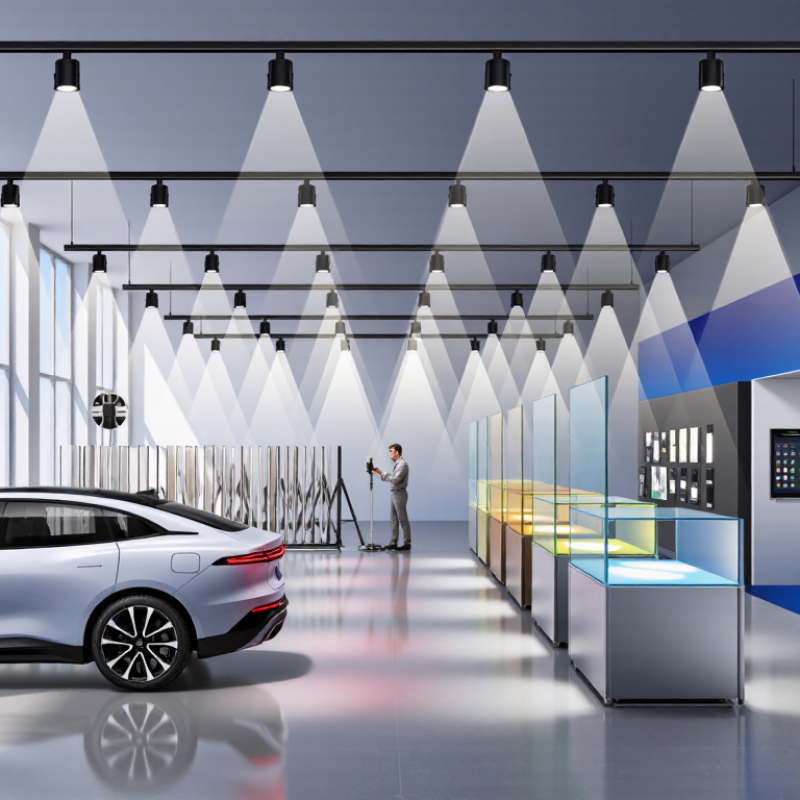
The best supplier is not always the one with the largest catalog. Your showroom needs lighting that supports product colors, customer movement, and daily maintenance. Start by checking the supplier’s experience with retail, automotive, furniture, or luxury display projects. Ask for completed project photos, fixture layouts, and measurable lighting results. Practical evidence matters more than polished sales language.

Request samples before approving a large order. Test beam angles, glare control, color consistency, and dimming performance on your actual display materials. A supplier should provide photometric files, color-rendering data, product specifications, and relevant safety documentation. Confirm whether the factory performs aging tests and electrical inspections. Clear answers usually reveal strong engineering control.

Do not ignore communication. Detailed drawings, stable lead times, spare-part support, and written warranty terms can prevent expensive delays. Ask how the supplier handles design changes after production begins. This is where many projects become difficult. A low quotation may hide weak quality control or costly replacements. I have found that a small pilot order often exposes problems early, although it can slow the schedule slightly. That delay is sometimes worth it. Check packaging, labeling, and installation instructions before shipment. Also confirm compliance with the regulations required in your project’s destination market.