10 Best Retail Lighting Suppliers for Global Buyers
Retail Lighting is no longer just a way to brighten aisles. It shapes how shoppers read labels, compare colors, and move through a store. The International Energy Agency has estimated that lighting represents about 15% of global electricity use and 5% of greenhouse gas emissions. Those figures cover lighting broadly, not retail alone, but they show why efficiency deserves attention. The U.S. Department of Energy’s 2017 solid-state lighting forecast projected that LED adoption could save 569 terawatt-hours of electricity annually in the United States by 2035. That is a projection, not a guaranteed result. Still, it highlights the scale of the opportunity.
For global buyers, choosing a supplier involves more than comparing fixture prices. Beam angles, color consistency, glare control, dimming compatibility, and replacement-part availability can affect everyday store operations. A fresh-food display may need accurate color rendering, while a high-ceiling warehouse aisle needs dependable, uniform coverage. Details matter. This guide reviews ten Retail Lighting suppliers with international buyers in mind, including their product strengths, project support, customization, and ability to serve different markets. It also considers practical sourcing questions, such as lead times, certifications, warranty terms, and local technical assistance. These details should be verified for each project; supplier claims do not replace independent checks. No single supplier fits every chain or store format. Some specifications look excellent on paper and disappoint under actual ceiling heights, merchandising layouts, or operating schedules. That is worth remembering. The comparison aims to help buyers ask sharper questions before committing, rather than promise a perfect choice.
Understanding Retail Lighting Needs Across Global Markets
10 Best Retail Lighting Suppliers for Global Buyers
Understanding Retail Lighting Needs Across Global Markets
Retail lighting must do more than make products visible. It shapes color perception, guides shoppers through aisles, and affects staff comfort during long shifts. Needs differ by market: daylight levels, ceiling heights, store formats, operating hours, and maintenance capacity all influence fixture choice. A warm spotlight that flatters bakery displays may distort the appearance of fresh produce. Small details matter.
The International Energy Agency estimates that lighting accounts for about 15% of global electricity use and around 5% of greenhouse-gas emissions. That makes efficiency a practical purchasing concern, not just a specification-sheet benefit. The U.S. Department of Energy says LEDs use at least 75% less energy than incandescent lighting. However, that comparison does not predict savings against every existing retail system. Measure current loads and operating hours first.
Ask suppliers for photometric files, sample fixtures, dimming compatibility, and clear warranty terms. Check whether replacement parts and technical support are available in the destination market. A drawing can look perfect; a lit shelf may not. Test color rendering and glare in the actual store, especially near glossy packaging and refrigerated cases. One imperfect but useful lesson: buyers often compare purchase prices before checking installation and maintenance needs. Include both.
Key Criteria for Evaluating International Lighting Suppliers
For global buyers, a lighting supplier should prove more than a low unit price. Ask for current test reports and confirm that product documentation matches the requirements of your destination market. Check electrical ratings, safety certifications, and labeling before approving a purchase order. Details matter.
Review the photometric files, not just the product photos. Compare lumen output, beam angle, color temperature, and color rendering index against the needs of the actual retail space. A warm display light can flatter merchandise, while a narrow beam may leave shelf edges dim. Request a sample and inspect it under store conditions; catalog images rarely tell the whole story.
Then test the supplier’s delivery and support process. Request a written lead time, minimum order quantity, warranty terms, and a clear procedure for handling damaged goods. Ask how cartons are labeled and protected, especially if products will pass through several warehouses. Check references from buyers with similar order sizes or market requirements. A spreadsheet helps, but it can miss the quality of a supplier’s answers when specifications change. That matters. Compare the full landed cost, including freight and replacement risks, rather than choosing on price alone. Some uncertainty remains until the first shipment arrives, so consider a controlled trial order before scaling up.
10 Best Retail Lighting Suppliers for Global Buyers
10 Best Retail Lighting Suppliers for Global Buyers
Choosing a retail lighting supplier is less about catalog size than dependable performance across markets. Ask for independent photometric files, color-rendering data, warranty terms, and clear lead times. Request a sample and test it over actual merchandise: a warm spotlight can make wood inviting but distort fabric colors. Details matter.
Efficiency deserves close scrutiny. The U.S. Department of Energy’s 2017 Energy Savings Forecast of Solid-State Lighting projected that LED adoption could save about 150 terawatt-hours of electricity annually in the United States by 2035. That is a forecast, not a guarantee for any store. Compare measured efficacy, dimming behavior, and control compatibility, then estimate savings using your own operating hours and energy prices.
For global buyers, suppliers should explain how products are adapted for local voltage, installation conditions, and required market certifications. Check whether replacement drivers and lenses will remain available; a low purchase price is less attractive when repairs become difficult. Ask for documented color consistency between batches, especially when stores share a visual identity. No checklist is perfect. I would also compare a supplier’s answers with a real installation, because paperwork cannot reveal every glare problem.
Comparing Supplier Products, Certifications, and Services
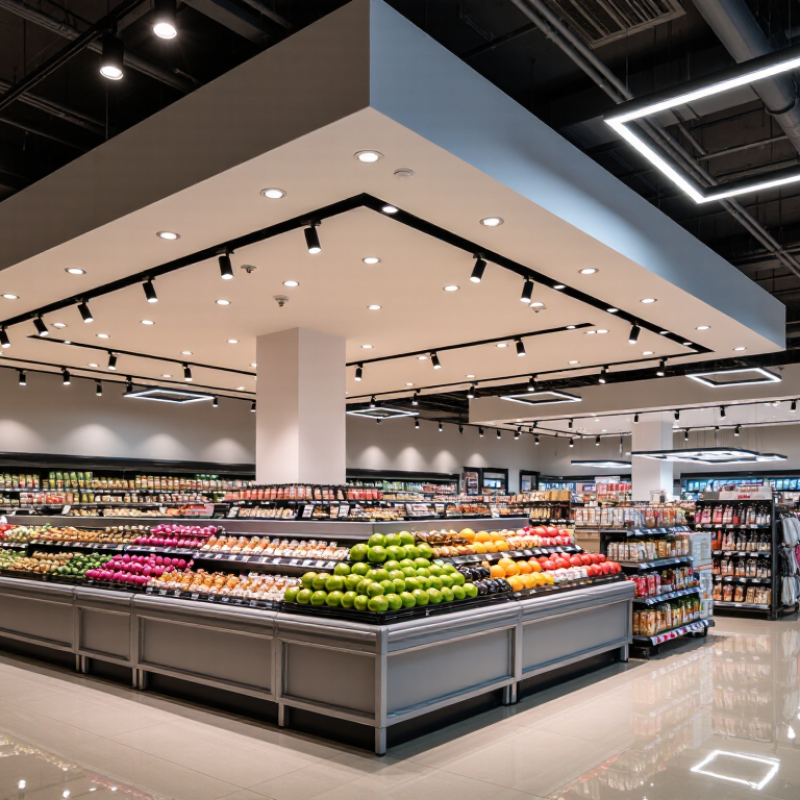
Retail lighting suppliers vary in more than fixture style. Some focus on track heads and adjustable spotlights; others offer linear systems for shelves, counters, and display cases. Compare beam angles, color temperature, glare control, and dimming compatibility against the actual store layout. A sample fixture above a checkout can reveal harsh reflections that product photos often hide. Small details matter.
Certifications need careful checking. Ask for current test reports and product documentation, not just certification logos in a catalog. Verify that the documents match the exact model and intended market. Electrical safety, electromagnetic compatibility, and energy requirements can differ by destination. A supplier with clear records makes review easier, but a certificate alone does not prove that a fixture suits every installation. The paperwork can be less tidy than expected.
Service also separates suppliers. Compare warranty terms, spare-part availability, lead times, and support for lighting plans or mock-ups. Ask how they handle a late shipment or a failed driver, and request a written response process. Some suppliers provide detailed photometric files; others may offer only basic specifications. That gap matters when coordinating with contractors. A fair comparison weighs product performance, verifiable documentation, and practical support together, while allowing for project-specific trade-offs.
Choosing the Right Supplier for Your Retail Project
Choosing a retail lighting supplier starts with the space, not the fixture catalogue.
A narrow aisle, glossy packaging, and a high ceiling create different lighting demands. Ask suppliers for a layout showing illuminance, glare control, color rendering, and maintenance access. Request a sample fixture and test it beside actual merchandise. Product photos can hide harsh reflections.
Energy performance matters, but compare complete proposals.
The U.S. Department of Energy’s 2015 United States Lighting Market Characterization estimated that lighting used about 17% of U.S. commercial-sector electricity. Ask for connected load, control options, and projected operating costs, with assumptions clearly stated. Check whether dimming works with the proposed drivers. Small compatibility gaps can become expensive.
Look beyond the initial quotation.
Confirm lead times, spare-part availability, warranty coverage, and who handles technical support across your project locations. Request photometric files and documentation for relevant safety and performance requirements. A supplier’s response to a difficult question is useful evidence, too. Not every polished proposal is practical. I would revisit the specification after a mock-up, since real shelves often reveal details drawings miss.