


How to Choose Retail Lighting for Global Stores in 2026?
Choosing Retail Lighting for global stores in 2026 requires more than selecting attractive fixtures. Lighting must support product presentation, customer comfort, energy performance, and consistent brand identity. A warm spotlight can make leather appear rich, while poor glare control may tire shoppers within minutes. Small details matter.
Store teams should evaluate color rendering, color temperature, beam angles, dimming systems, and maintenance access. High-quality LEDs can reveal product colors accurately across fashion, food, electronics, and beauty environments. However, one lighting recipe rarely suits every market. Local daylight, ceiling height, store format, and customer expectations can change the result. Experience from pilot stores should guide broader rollout decisions.
Reliable planning also depends on measurable evidence. Teams can compare lux levels, glare conditions, energy use, and customer feedback before approving a global specification. Independent testing and qualified lighting professionals can help verify performance and safety requirements in each region. No checklist is perfect. That assumption can fail. A fixture may perform well in a showroom but create harsh reflections beside a glass display. Future-ready systems should allow scene adjustment, sensor integration, and remote monitoring without making daily operation complicated. The strongest approach balances visual impact with practical maintenance, local expertise, and documented results. Retail Lighting should look intentional, feel comfortable, and continue performing after the opening campaign ends.
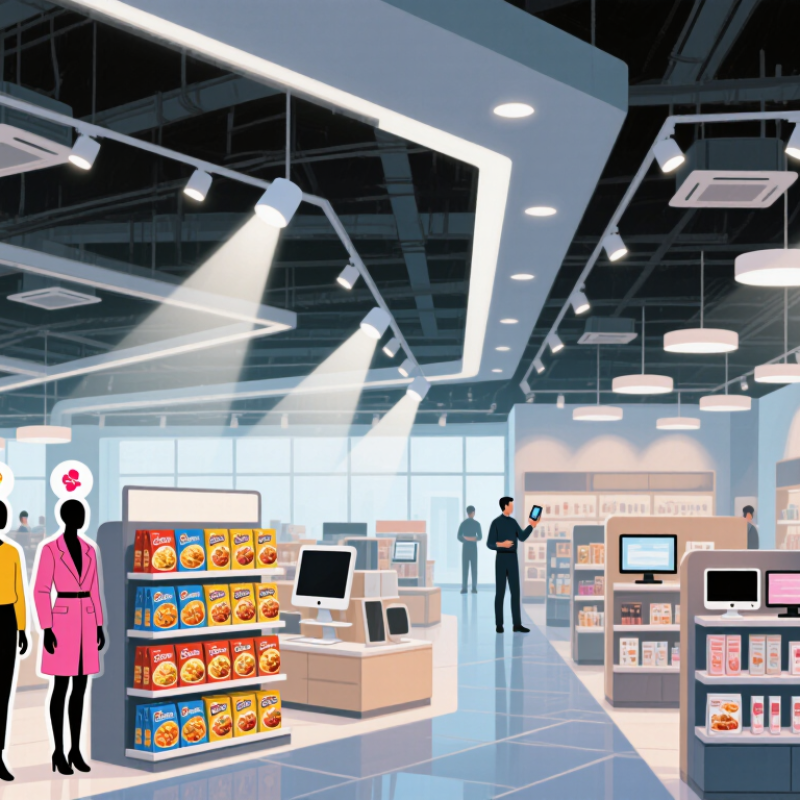
Define Store Lighting Goals and Brand Requirements
Before choosing retail lighting for global stores in 2026, define the experience you want customers to have. Set measurable goals for visibility, product color, dwell time, comfort, and energy use. A fitting room may need soft, accurate light. A display table may need stronger vertical illumination. Specify target brightness, color temperature, color rendering, glare control, and dimming behavior. These details turn a creative idea into a reliable lighting brief.
Brand requirements should also reflect local architecture and customer habits. In store assessments, I compare daylight, ceiling height, window exposure, and product materials before recommending equipment. A warm atmosphere can feel welcoming, but it may weaken color accuracy. Bright light can improve visibility, yet create reflections on glass or polished surfaces. We often miss these conflicts during planning. A small pilot area can reveal them before a full rollout.
Tips: Write the lighting brief with store managers, designers, and maintenance teams. Test samples beside real products. Measure light at eye level and on shelves. Check evening conditions, not only daytime scenes. Leave room for adjustment; the first plan is rarely perfect. Document replacement access, cleaning needs, and local electrical requirements. Use consistent criteria across countries, while allowing practical regional changes.
How to Choose Retail Lighting for Global Stores in 2026? - Define Store Lighting Goals and Brand Requirements
| Lighting Dimension | Store Lighting Goal | Recommended Target | Brand Requirement | Verification Method |
|---|---|---|---|---|
| General ambient illumination | Create comfortable, even visibility throughout sales areas and circulation paths. | Approximately 300–500 lux for general retail areas, adjusted for merchandise, ceiling height, and local regulations. | Consistent brightness without visibly dark zones, harsh hotspots, or excessive ceiling glare. | Measure horizontal illuminance at working-plane height using a calibrated lux meter. |
| Feature and focal lighting | Direct attention to new arrivals, seasonal campaigns, promotional displays, and hero products. | Use an accent-to-ambient illuminance ratio of approximately 2:1 to 5:1, depending on the desired visual hierarchy. | The visual focus should support the merchandising plan without making the rest of the store appear underlit. | Compare measured focal-point illuminance with surrounding ambient levels and review the display from customer viewpoints. |
| Color rendering | Show product colors, materials, skin tones, food, and packaging accurately. | CRI 80 minimum for many general retail areas; CRI 90 or higher for fashion, cosmetics, art, premium goods, and food presentation. | Specify a consistent color-rendering level across all countries and require documented LED performance. | Review LM-79 or equivalent photometric documentation and perform on-site color checks under the selected luminaires. |
| Color temperature | Create a consistent emotional tone and support merchandise presentation. | 2700–3000 K for warm and intimate environments; 3500–4000 K for neutral, contemporary, or task-oriented retail settings. | Define approved CCT ranges and maintain the same visual identity across regions, formats, and replacement products. | Check fixture specifications, binning tolerance, and installed CCT using a calibrated color meter or spectroradiometer. |
| Glare control | Protect visual comfort for shoppers and employees, especially near mirrors, screens, and polished surfaces. | Use shielding, diffusers, baffles, appropriate beam angles, and low-glare optics; target UGR 22 or lower where practical for customer-facing areas. | No direct view of intense LED points from normal customer sightlines and no distracting reflections on screens or glossy merchandise. | Conduct a sightline review from standing and seated positions and review photometric glare data where available. |
| Beam angle and optical flexibility | Adapt lighting to different shelf depths, product sizes, display heights, and store layouts. | Use narrow beams for small focal objects, medium beams for mannequins and displays, and wide beams for shelves and general coverage. | Prefer adjustable track heads, interchangeable optics, or zoom systems when visual merchandising changes frequently. | Test several beam distributions in a representative mock-up before approving the global specification. |
| Lighting uniformity | Prevent uneven aisles, dark corners, and inconsistent shelf visibility. | Set a project-specific minimum-to-average uniformity target, commonly around 0.4–0.6 for general retail zones. | Maintain a predictable visual experience even when store dimensions and ceiling systems vary by market. | Use a measurement grid to calculate minimum, average, and maximum illuminance after installation. |
| Vertical illumination | Improve product-face readability, signage visibility, and facial recognition. | Prioritize vertical light on shelving, wall displays, signage, and fitting-room mirrors rather than relying only on horizontal floor illuminance. | Define critical display surfaces and minimum acceptable visibility for key product categories. | Measure vertical illuminance at representative display faces and assess readability from normal viewing distances. |
| Energy performance | Reduce operating cost and support energy-efficiency targets without compromising merchandising quality. | Compare installed lighting power density, efficacy, operating hours, dimming potential, and maintenance factors rather than wattage alone. | Set a maximum project power budget and require controls-ready products for future optimization. | Review calculated watts per square meter, annual energy use, control schedules, and commissioning records. |
| Controls and dimming | Adjust lighting for trading hours, cleaning, deliveries, seasonal events, and changing daylight conditions. | Specify compatible dimming and control protocols, occupancy scheduling, scene setting, and daylight response where appropriate. | Use a repeatable control strategy that store teams can operate without specialist technical skills. | Test dimming range, flicker behavior, scene recall, sensor placement, and manual override functions. |
| Flicker and visual stability | Avoid visible flicker, stroboscopic effects, and camera-band interference in customer and staff environments. | Select drivers with documented low-flicker performance, especially where video recording, rotating equipment, or prolonged visual tasks are present. | Apply one minimum flicker requirement globally instead of accepting inconsistent regional substitutions. | Review driver test data and evaluate fixtures at full output and dimmed levels using suitable measurement equipment. |
| Environmental suitability | Maintain safe and reliable operation in humid, dusty, refrigerated, outdoor, or high-temperature areas. | Select the appropriate IP rating, ambient-temperature range, impact resistance, and corrosion protection for each location. | Create location-based specifications instead of using one fixture type throughout every store zone. | Match product certification and enclosure ratings with the environmental conditions documented in the site survey. |
| Maintenance and lifecycle | Keep the intended visual standard over time and minimize disruption from relamping or fixture replacement. | Evaluate rated life, lumen maintenance, replaceable components, spare-part availability, cleaning access, and warranty terms. | Use a controlled product schedule with approved equivalent components and consistent replacement criteria. | Review lifetime assumptions, maintenance intervals, spare inventory, and post-installation light-level audits. |
| Global compliance and local adaptation | Deliver a recognizable lighting experience while meeting electrical, safety, accessibility, and energy requirements in each market. | Use a global performance baseline with locally verified voltage, wiring, emergency-lighting, certification, and energy-code requirements. | Separate non-negotiable brand standards from site-specific variables such as daylight, ceiling construction, climate, and local code. | Complete a country-by-country compliance review, photometric design review, site mock-up, and final commissioning report. |
Related Posts
-

Maximize Retail Sales with Innovative Store Lighting Solutions Boosting Customer Experience
-
2026 Best Retail Store Lighting Types for Global Buyers
-
How to Enhance Customer Experience with Effective Store Lighting
-

Maximizing Value with Effective After Sales Support and Cost Savings in Lighting Gallery
-
Essential Tips for Optimizing Showroom Lighting for Global Buyers
-
10 Best Lighting Showrooms: Transform Your Space with Style