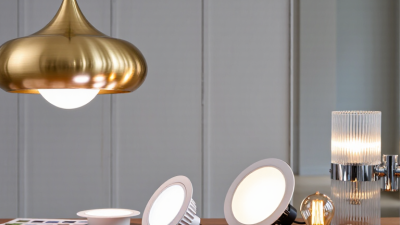
How to Find the Best Lighting Gallery for Global Buyers?
Finding the right Lighting Gallery can feel simple until a project crosses borders. A polished showroom is not always a reliable supplier. Global buyers must examine design quality, technical evidence, communication, and delivery experience together. The strongest galleries explain beam angles, color temperature, color rendering, dimming systems, and expected lifetime in clear language. They also provide product datasheets, photometric files, installation guidance, and realistic photographs. Details matter.
Lighting expert Sally Storey offers a useful principle: “Good lighting should support the space, not compete with it.” This idea applies to the gallery itself. A trustworthy Lighting Gallery should help buyers select fixtures for homes, hotels, restaurants, offices, and public environments. It should not push the most expensive model without understanding the room, ceiling height, surface materials, or daily use. Ask for physical samples when finishes and glare are important. Online images can mislead. Sometimes, even a carefully prepared specification needs revision after testing.
For international purchasing, reliability includes more than attractive products. Buyers should review manufacturing experience, quality-control procedures, packaging standards, replacement policies, warranty terms, and export documentation. Confirm whether the supplier can meet local electrical requirements through qualified professionals. Check response times, minimum order quantities, lead times, and after-sales support before placing an order. Independent references are valuable, although they are not perfect. A gallery may have excellent products but weak logistics. Another may communicate well but lack technical depth. This guide explores how to compare those differences and identify a Lighting Gallery that delivers practical value, not merely visual appeal.
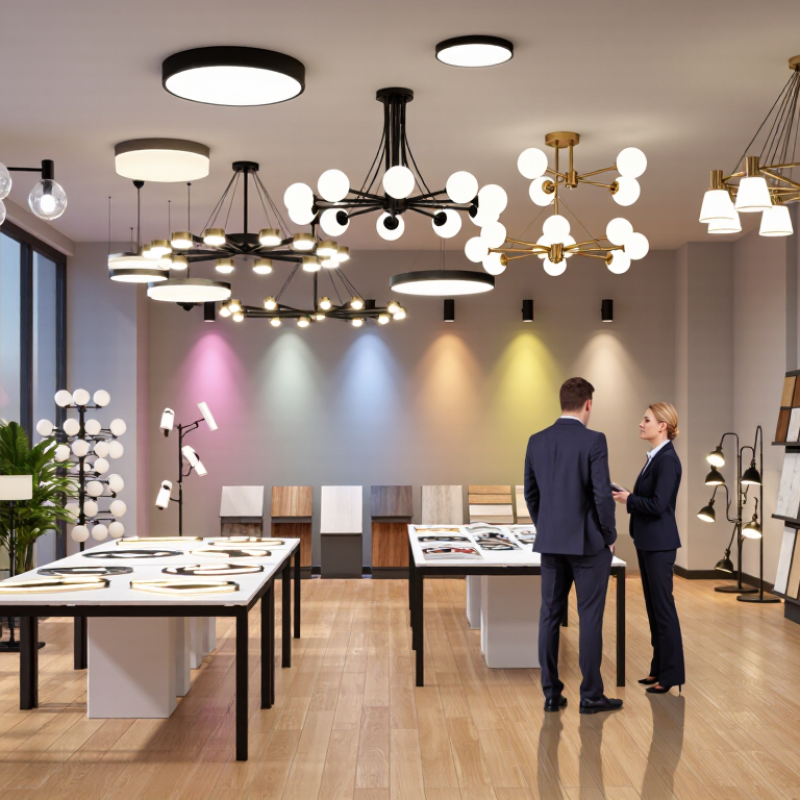
Defining the Needs of Global Lighting Buyers
How to Find the Best Lighting Gallery for Global Buyers?
Defining the Needs of Global Lighting Buyers
Global lighting buyers need more than attractive displays. They need solutions that match voltage, climate, installation methods, and local requirements. A serious gallery should ask for project drawings, ceiling heights, room functions, and target delivery dates. These details prevent expensive mismatches later.
For example, a coastal hotel may require corrosion-resistant materials and suitable ingress protection. A retail project may need accurate color rendering, adjustable beams, and dependable dimming. Buyers should review photometric files, efficiency data, test reports, and warranty terms. They should also confirm replacement-part availability and packaging quality before ordering.
Ask practical questions. Can the gallery provide samples? Can its technical team explain color temperature differences clearly? Are product specifications consistent across languages and documents? A reliable supplier should answer with evidence, not vague promises. Factory visits, sample inspections, and video demonstrations can reveal finishing quality and assembly details.
I still miss details sometimes. Small oversights matter. A connector may not fit the local system, or a delivery schedule may ignore seasonal customs delays. This is why experienced buyers create a written checklist and request approval drawings. The best gallery is not always the largest or most polished. It is the one that understands the buyer’s conditions, admits limitations, and communicates accurately throughout the project.
Identifying Reliable Lighting Galleries and Suppliers
A reliable lighting gallery does more than display attractive fixtures. It proves that each product can perform safely and consistently. The International Energy Agency’s Energy Efficiency 2024 report states that LEDs represented about half of global lighting sales in 2022. This shift increases buyer choice, but also creates uneven quality. Experienced buyers should request photometric files, color-temperature data, lumen-maintenance details, and electrical test reports. A polished showroom is not enough.
Check the supplier’s technical depth. Ask whether samples match mass production. Confirm the factory’s quality-control stages, material traceability, packaging tests, and warranty process. Certificates should be verifiable, not merely printed in a catalog. The U.S. Department of Energy has repeatedly emphasized testing, performance claims, and consistent LED specifications as essential for dependable lighting decisions.
Compare beam angles under real ceiling heights. A warm lamp may look different beside daylight. I have found that small sample-room differences can expose major production inconsistencies.
Tips: Request one physical sample and one independent test report. Review response times and replacement procedures. Ask for the product’s expected lifetime under stated operating conditions. Visit the gallery virtually or in person, and inspect wiring, finishes, labels, and carton protection. Be careful with unusually low prices. They may reflect thinner materials, incomplete testing, or weaker after-sales support. Still, no checklist is perfect. A supplier can pass an audit and later change components, so periodic sample checks remain necessary.
Comparing Product Quality, Design, and Technical Standards
A strong lighting gallery should help global buyers compare products, not merely display attractive fixtures. In practical sourcing, inspect housing materials, diffuser clarity, socket alignment, and cable finishing. Ask for a working sample. Check whether its light output matches the listed specification. A beautiful fitting can still produce glare, uneven color, or excessive heat. These small failures become expensive after installation. Look closely.
Design quality also depends on purpose and location. A pendant for a hotel lobby needs different proportions than a task light for a desk. Compare beam angle, color temperature, color rendering index, dimming behavior, and maintenance access. Request drawings, photometric files, installation instructions, and replacement-part details. Galleries that explain design decisions often understand their products better. Still, presentation can mislead. A perfect display room may hide weak performance in a real ceiling.
Technical compliance should be verified for each destination, rather than assumed from a sales label. Confirm voltage, frequency, plug requirements, ingress protection, electromagnetic compatibility, and applicable safety markings. Request current test reports from qualified laboratories, with model numbers matching the samples. Check factory quality controls, traceability, packaging, and warranty terms. Independent inspection adds confidence for larger orders. No process is flawless. Even careful buyers may overlook installation conditions, so test samples under actual voltage, mounting height, and control systems before committing.
Evaluating Prices, Certifications, and International Services
How to Find the Best Lighting Gallery for Global Buyers?
Price is only the starting point when evaluating a lighting gallery. Compare the product price, sample charge, minimum order, packaging, freight, and import costs. Ask for a clear quotation with currency, payment terms, lead time, and delivery conditions. A lower price may hide fragile packaging or expensive replacement parts. Measure the landed cost instead. My first comparison once focused too much on unit price. That was a costly mistake.
Certifications need careful checking. Request current test reports, certification numbers, rated voltage, wattage, and product safety information. Confirm that the documents match the exact model, not a similar-looking fixture. Requirements differ between markets, so ask whether the product suits your destination. Independent laboratory records and traceable factory details improve reliability. Still, paperwork is not perfection. Inspect wiring, finishes, light output, and heat performance through samples or video testing.
Tips: Ask for photos of inner packaging, plug types, carton labels, and installation guides. Check whether the gallery supports multilingual communication, export documentation, customs coordination, and after-sales claims. Clarify warranty coverage and replacement procedures before ordering. Request a small trial order when possible. It reveals packing quality, delivery accuracy, and communication speed. Mistakes can happen. Responsive correction matters more than polished promises.
How to Find the Best Lighting Gallery for Global Buyers? — Evaluating Prices, Certifications, and International Services
Benchmark comparison of anonymous lighting gallery profiles for international sourcing decisions
| Profile | Primary Market Region | Main Product Focus | Indicative Wholesale Price Range | Typical MOQ | Sample & Customization Policy | Common Product Certifications | Factory / Quality Documentation | Export Experience | International Services | Typical Lead Time | Payment & Trade Terms | Buyer Suitability Score |
|---|---|---|---|---|---|---|---|---|---|---|---|---|
| Supplier Profile 01 | East Asia | Decorative pendants, wall lights, ceiling fixtures | US$18–85 per unit | 50–100 units per model | Paid samples; shade color and cable length customization available | CE RoHS Country-specific reports available | ISO 9001 production system claimed; batch inspection reports available upon request | 8+ years; regular shipments to Europe, North America, and Oceania | OEM/ODM Private labeling Carton drop testing Consolidated shipping | 25–40 days after approved sample | 30% deposit / 70% before shipment; FOB and CIF commonly offered | ★★★★☆ 4.4/5 |
| Supplier Profile 02 | South Asia | Handcrafted metal, rattan, wood, and natural-fiber lighting | US$24–140 per unit | 30–80 units per model | Pre-production samples required; handmade finish variation should be approved in writing | CE available for selected models Material declarations | Third-party pre-shipment inspection accepted; material and packaging checklists available | 5+ years; strongest experience with boutique retail and hospitality projects | Custom finishes Low-volume production Product photography Mixed-model cartons | 35–60 days; seasonal delays may occur | 40% deposit / 60% before shipment; FOB and EXW offered | ★★★★☆ 4.1/5 |
| Supplier Profile 03 | Southeast Asia | Commercial LED panels, downlights, track lights | US$6–38 per unit | 200–500 units per model | Samples available; driver, color temperature, beam angle, and dimming options configurable | CE RoHS IEC test reports Regional approvals on request | In-house electrical testing; lumen, power-factor, and temperature test data available | 10+ years; established distribution channels in Asia-Pacific and the Middle East | IES files Lighting calculations OEM packaging Container loading plans | 20–35 days for standard models | 20% deposit / 80% against shipping documents; FOB, CIF, and DDP subject to destination | ★★★★☆ 4.5/5 |
| Supplier Profile 04 | Eastern Europe | Architectural lighting, linear systems, project-specific fixtures | €35–260 per unit | 10–30 units per configuration | Technical samples available; custom dimensions and mounting systems supported | CE RoHS EN 60598 testing Photometric files | Formal technical submittals, wiring diagrams, installation instructions, and traceability records | 12+ years; strong project supply experience across European markets | DALI compatibility 0–10 V options BIM files Project support | 30–50 days depending on engineering approval | 30% deposit / balance before dispatch; FCA, CPT, and DAP commonly available | ★★★★★ 4.7/5 |
| Supplier Profile 05 | North America | Commercial, industrial, outdoor, and code-sensitive lighting | US$28–420 per unit | 10–50 units per model | Samples generally available; engineering changes require formal approval | UL or ETL options FCC where applicable DLC eligibility for selected products | Product liability documentation, photometric files, warranty terms, and compliance files commonly provided | 15+ years; experienced in North American commercial procurement | Project quotations Local technical support Spare parts Warranty administration | 15–30 business days for standard products | Net terms may be available after credit review; domestic and export delivery supported | ★★★★★ 4.6/5 |
| Supplier Profile 06 | Middle East | Hospitality chandeliers, decorative feature lighting, bespoke installations | US$120–1,800 per unit | 5–20 units per design | Detailed approval drawings and physical samples available for project orders | CE for applicable products Material certificates Local authority review may be required | Welding, surface-finish, packing, and installation documentation available for larger projects | 7+ years; focused on hotels, restaurants, residences, and high-end developments | Site coordination Installation guidance Crating On-site service by arrangement | 45–90 days depending on design complexity | 50% deposit / 50% before delivery; project-specific DAP and DDP quotations | ★★★★☆ 4.2/5 |
| Supplier Profile 07 | Oceania | Residential and outdoor lighting for local electrical requirements | AU$22–310 per unit | 20–60 units per model | Samples available; standard catalog products prioritized over full customization | RCM pathway for applicable products Electrical safety documentation Model-specific verification required | Supplier declarations, electrical test records, warranty policy, and installation instructions available | 6+ years; familiar with Australia and New Zealand distribution requirements | Local stock options Replacement parts After-sales support Retail packaging | 10–25 business days from local inventory; longer for imports | Payment before dispatch for new accounts; domestic and international freight options | ★★★★☆ 4.3/5 |
| Supplier Profile 08 | Multi-region Trading Gallery | Mixed catalog: decorative, residential, commercial, and smart lighting | US$8–500 per unit | 1–10 units for samples; 20–100 units for repeat orders | Wide sample selection; customization depends on the original production source | Certification varies by model Verify original test reports Do not rely on catalog claims alone | Documentation quality varies; independent inspection and certificate validation are recommended | 3+ years as a sourcing intermediary; supplier-level export history should be checked | Multi-supplier sourcing Consolidation Translation Freight coordination | 25–70 days depending on product origin | 30%–50% deposit; terms and destination delivery options vary by source factory | ★★★☆☆ 3.8/5 |
Evaluation notes: Price ranges are indicative wholesale benchmarks and vary by material, wattage, finish, order quantity, packaging, shipping route, and exchange rate.
Certification reminder: CE, RoHS, UL, ETL, RCM, FCC, EN 60598, and similar references are not interchangeable. Buyers should verify that each certificate or test report matches the exact model, electrical configuration, market, and production site.
Recommended due diligence: Request recent test reports, factory audit records, sample approval documents, warranty terms, carton specifications, and a written Incoterms quotation before placing a commercial order.
Selecting the Best Gallery and Managing the Purchase Process
How to Find the Best Lighting Gallery for Global Buyers?
Selecting the right lighting gallery requires more than attractive displays. I examine product specifications, material samples, and installation details before discussing prices. A reliable gallery should explain voltage options, color temperature, beam angles, and IP ratings clearly. These details prevent costly surprises after shipment. Ask for current photos, technical drawings, and a written quotation. Vague answers deserve caution.
The purchase process should follow visible checkpoints. Confirm the model, finish, dimensions, quantity, lead time, packaging, and replacement policy in one document. Request a sample when the project involves many units. Check its wiring, surface quality, light distribution, and actual color under indoor conditions. I once trusted a digital image too quickly. The delivered finish looked warmer than expected. That mistake taught me to approve physical samples, not screens.
Payment terms also need careful control. Use staged payments linked to confirmed production milestones. Before dispatch, arrange an inspection with photos, quantity records, and carton labels. Check whether documents support customs clearance in the destination country. Communication matters here. A gallery may offer excellent products but poor follow-up. Test response times before placing a large order. Keep every revision recorded, even small changes to cable length or ceiling fittings. Some buyers overlook these details, then blame the supplier. Both sides should review the order carefully.
Lighting Gallery Selection: CRI Benchmarks by Application
Color Rendering Index (CRI) is a practical screening metric when comparing lighting galleries. General spaces commonly use CRI 80 or above, while retail displays and color-critical applications often require CRI 90–95 or higher. Buyers should confirm the final CRI, CCT, photometric files, safety certifications, warranty, lead time, and sample approval before placing an order.
Reference basis: established lighting practice and international luminaire performance standards. Values are application benchmarks, not universal legal requirements.
Related Posts
-
How to Choose Boutique Lighting for Global Sourcing?
-
10 Best Lighting Showrooms: Transform Your Space with Style
-
Innovative Solutions for Best Store Lighting to Enhance Retail Performance and Customer Experience
-
2026 Best Lighting Fixtures for Global Buyers to Explore?
-
Best Foyer Lighting Ideas to Illuminate Your Home Space?
-
Maximizing Your Home's Natural Light: The Science of Window Lighting for Healthier Living Spaces