Top 10 Restaurant Lighting Ideas for Modern Dining

Restaurant Lighting shapes how guests read a room before they notice the menu. A warm glow over a wooden table can feel welcoming, while a bare, bright ceiling light may make dinner feel like a work break. Good lighting also helps staff move safely and lets guests see food clearly. It is not only decoration; it affects comfort, function, and the character of a restaurant.

This guide explores ten practical ideas for modern dining spaces, from layered pendants and discreet wall lights to flexible dimming and carefully placed accent beams. Each choice should suit the room’s ceiling height, table layout, finishes, and daylight. For example, a pendant can anchor a two-person table, but the same fixture may block sightlines above a crowded communal table. Small details matter. Light that looks beautiful in a showroom can feel harsh beside a glossy tabletop. That part is easy to overlook.

A useful plan balances ambient, task, and accent lighting rather than relying on one dramatic fixture. It should also account for maintenance, energy use, and the changing mood from lunch to evening service. There is no single formula. Even a thoughtful design may need adjustment once guests fill the room and reflections appear. The ideas ahead offer a clear starting point, not a substitute for testing the actual space.
Top 10 Restaurant Lighting Ideas for Modern Dining

Establish a 200 lx Dining-Area Base Using EN 12464-1 as a Benchmark

For modern dining, use 200 lx as the maintained illuminance target across the dining area. EN 12464-1:2021 lists this benchmark for dining rooms, alongside a glare limit of UGR 22 and a minimum colour rendering index of Ra 80. Treat these figures as a design baseline, not a promise that every table will feel equally bright.

Measure at table height, including corners and booths. A pendant may create a bright pool while leaving faces in shadow. Keep it warm. Layering indirect ceiling light with shielded pendants can soften contrast without losing the benchmark.

CIE 117 explains how the Unified Glare Rating method evaluates discomfort glare; it is a useful check when choosing pendant size and spacing.

In practice, test the layout with chairs occupied and menus on the table. Dark finishes absorb more light, so the same fittings may not deliver the same result. Dimming helps adapt the scene, but it does not correct poor distribution.

There is a catch: operators sometimes turn lights down for atmosphere and leave walkways too dim. The U.S. Department of Energy’s Energy Saver guidance reports that LEDs can use up to 75% less energy than incandescent lamps. That saving matters, but comfort still needs a measured check after installation.

Layer Pendants, Wall Washers, and Dimmers Around the Ambient Light

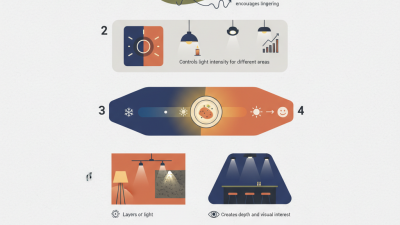
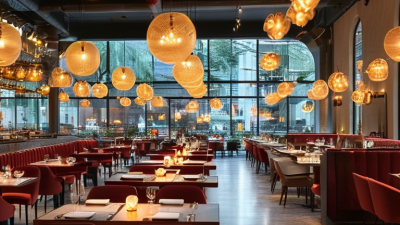
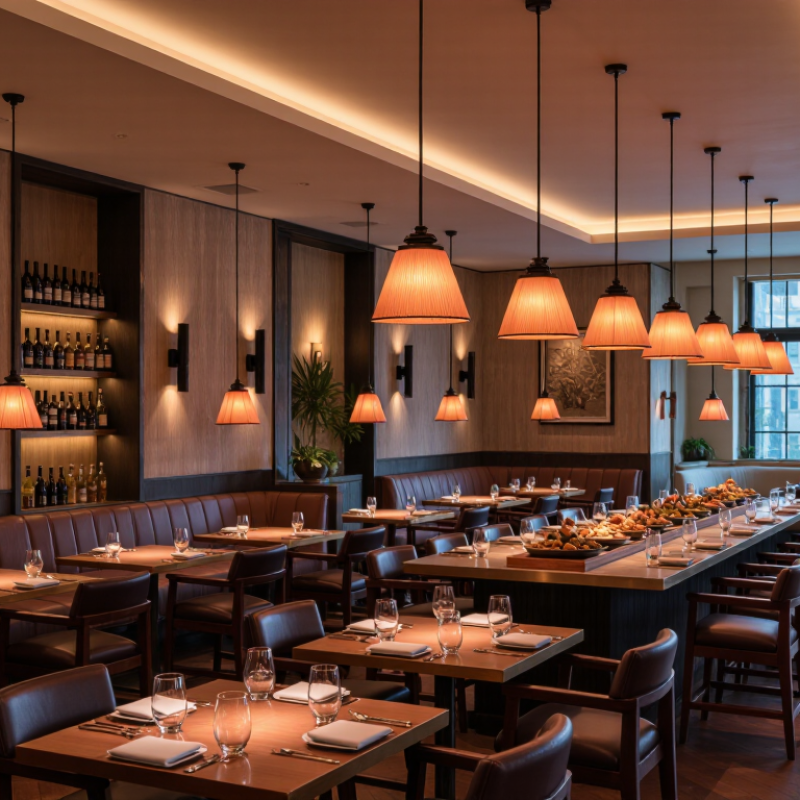
Start with an even ambient layer, then add pendants above tables for focused pools of light. Hang them high enough to preserve sightlines, but low enough to illuminate plates without glare. Wall washers soften dark edges and bring out texture in brick, plaster, or curtains. Keep the glow warm. The room should feel inviting, not theatrical.

Use dimmers to adjust these layers through lunch, dinner, and cleanup. The Illuminating Engineering Society’s Lighting Handbook distinguishes visual tasks across spaces, a useful reminder that dining tables and walkways need different treatment. The U.S. Department of Energy reports that LEDs use at least 75% less energy than incandescent lighting. Dimming can further reduce output when the room needs less light, though results depend on the fixtures and controls. Not every table agrees. Test a setting during service, when food, faces, and reflections are all visible.

Tips: Aim pendants at tabletops, not diners’ eyes. Put wall washers on a separate control. Check dimmers for flicker at low settings, and test one table before changing the whole room.

Reserve 500 lx Task Lighting for Kitchen and Food-Preparation Zones

In a modern restaurant, reserve about 500 lx for kitchen and food-preparation work surfaces. Measure illuminance at the counter, not at the ceiling or floor. A bright ceiling alone can leave a chef’s hands casting shadows over a chopping board. Shadows matter. Place task lights to illuminate the work from a useful angle, while keeping fixtures out of workers’ direct line of sight.

Use focused, well-shielded fittings over prep benches, sinks, and plating areas. Choose light that renders food colors clearly, and check for glare on stainless-steel counters. Dimming or separate switching can help staff adapt the light for different tasks. A layout may look balanced on paper, yet still create a dark patch beside a tall shelf. Test the finished space at the actual work plane, and adjust where needed.

Tips: Clean lenses regularly; grease and dust reduce light output. Check the measured level after installation, with normal room lighting on. Keep dining tables softer and more relaxed, while maintaining the brighter task light in kitchen zones.

Modern Restaurant Lighting: Typical Illuminance Targets

Use layered lighting to balance comfort and visibility: keep dining areas softer, add focused light where food is presented, and reserve around 500 lx for kitchen and food-preparation tasks. These illustrative targets should be checked against local standards and project conditions.

Choose CRI 80+ Sources to Render Food Colors More Accurately

Food is part of the dining experience, and its color shapes what guests expect before the first bite. Choose LED sources with a color rendering index (CRI) of at least 80 as a practical baseline. A tomato should look red, not dull brown; leafy greens should retain their fresh, varied tones. The difference is visible. Yet CRI is not a complete quality score. CIE’s general color-rendering method calculates its average from eight test colors, so it may not reveal how a source handles every food hue.

For a closer check, consult the IES TM-30-20 method, which evaluates 99 color samples and reports both fidelity and gamut. These measures can help compare how faithfully a lamp renders colors and whether it shifts their apparent saturation. In practice, test lighting over actual dishes: a glossy sauce, pale bread, and herbs can look different under the same fixture. Color temperature matters, too. A high-CRI lamp can still make a plate feel too cool or too amber. Review the food under the planned evening setting, not only in a showroom. I still find this step easy to skip when the room looks attractive on its own.

Reduce Glare with Shielded Fixtures and Independently Zoned Controls

Top 10 Restaurant Lighting Ideas for Modern Dining
Reduce Glare with Shielded Fixtures and Independently Zoned Controls

Glare can turn a comfortable dinner into a squinting match. Choose fixtures that direct light onto tables rather than into guests’ eyes. Deep shades, side shields, and well-placed diffusers can help, especially near reflective glassware or polished tabletops. Check the view from seated eye level, not only from the floor. A fixture that looks fine while standing may shine straight across a diner’s line of sight. That detail is easy to miss.

Give dining areas, the bar, and the entrance separate lighting controls. Each zone serves a different purpose: tables need soft, focused light, while a host stand may need brighter illumination for menus and reservations. Dimming each area independently lets staff adjust for daylight, service, and evening mood without making every corner equally bright. Small changes matter.

Tips: Before opening, sit at several tables and look toward each fixture. If a bulb is visible, adjust the shade, angle, or fixture position. Test the controls during a busy service, too; complicated settings are easy to neglect when staff are under pressure. A dimmer is useful, but it cannot fix a poorly aimed light.

Top 10 Restaurant Lighting Ideas for Modern Dining — Reduce Glare with Shielded Fixtures and Independently Zoned Controls
# Lighting Idea Best Application Suggested Fixture and Optics Typical Illuminance Suggested Color Temperature Glare and Zoning Approach
1 Shielded pendant lights over tables Dining tables and banquettes Opaque or deep-shade pendants with a controlled downward beam 100–200 lux on the tabletop 2200–2700 K Keep the light source above typical seated sightlines; control each dining area on a separate dimming zone.
2 Recessed downlights with glare control General dining-room illumination Deep-regressed or louvered downlights with medium-wide distribution 50–100 lux on the floor and general surfaces 2700–3000 K Use shielding and careful spacing to reduce direct view of the light source; zone separately from table lighting.
3 Wall sconces for vertical light Perimeter walls, booths, and corridors Indirect or diffused sconces with a covered lamp or LED source 50–150 lux on the wall, depending on the desired effect 2200–2700 K Choose diffusers that conceal the source from seated guests; group by wall or room section for independent dimming.
4 Indirect cove lighting Ceilings, perimeter details, and low-glare ambient fill Concealed linear lighting aimed at a reflective ceiling or cove surface 30–100 lux of ambient contribution 2700–3000 K Keep LEDs hidden from direct view and use a dedicated ambient-lighting zone to balance the room.
5 Adjustable accent lighting for artwork Artwork, textured walls, and architectural features Shielded track or recessed spotlights with adjustable beam angles Approximately 50–150 lux on display surfaces, subject to material sensitivity 2700–3000 K Aim beams away from diners’ eyes and reflective surfaces; place display lighting on its own zone.
6 Low-level aisle and circulation lighting Walkways, steps, and transitions between dining areas Shielded wall lights, step lights, or low-output recessed fixtures 20–50 lux on circulation surfaces 2200–2700 K Use cutoff optics and avoid bright points in seated sightlines; control independently from table and accent lights.
7 Back-bar and shelving illumination Bars, bottle displays, and service counters Concealed linear lighting or shielded display spots 100–300 lux on shelves and work surfaces 2700–3000 K Hide linear sources behind shelf lips and limit reflections in glass; provide separate bar and display zones.
8 Layered lighting at banquettes Booths and upholstered seating Combine shielded table pendants with indirect wall or cove light 100–200 lux on tables; lower ambient light around seating 2200–2700 K Keep each seating bay’s task and ambient lighting independently adjustable to suit different table layouts.
9 Warm-dimming evening scenes Dining rooms that shift from lunch to dinner service Dimmable fixtures and compatible warm-dimming controls Adjustable; commonly 50–200 lux across dining surfaces Approximately 2200–3000 K, depending on the dimming system Set separate scenes for dining, bar, and circulation areas; verify that dimming remains smooth and flicker-free.
10 Table-specific lighting with independent controls Flexible layouts, private dining, and mixed-use rooms Shielded pendants or focused fixtures arranged by table group 100–200 lux on tabletops 2200–2700 K Give table groups separate control channels so light can be adjusted without raising brightness throughout the room.
Planning note: Illuminance and color-temperature figures are practical starting ranges, not universal requirements. Final levels depend on room finishes, daylight, table layout, task needs, and local codes. Check glare and light distribution from seated eye level, and commission dimming zones on site.