What is a Sliding Roller and How Does it Work?
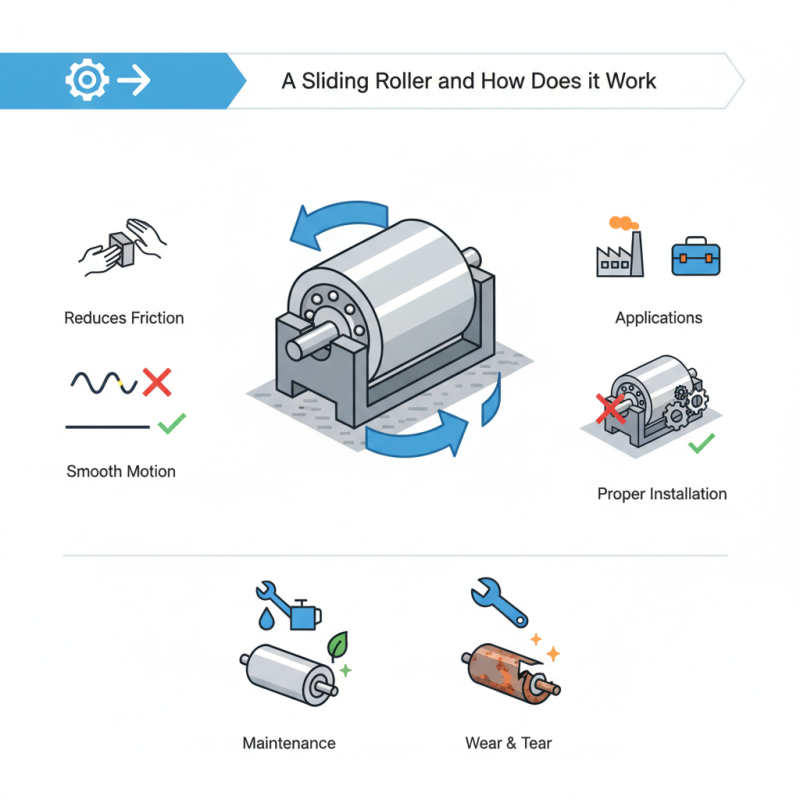
A sliding roller is a simple yet effective mechanical device. It facilitates movement by reducing friction. This tool is often used in various applications, from heavy machinery to everyday objects. Understanding its function can enhance efficiency and performance.
The sliding roller consists of a cylindrical shape that rolls along a surface. This unique design allows for smooth motion with minimal resistance. However, improper installation can lead to issues. It is essential to ensure correct alignment for optimal operation.
In many cases, people overlook the importance of maintenance. A well-maintained sliding roller can significantly improve productivity. Neglecting it might cause wear and tear, which can lead to costly repairs. Reflecting on these factors is crucial to maximize its benefits in practical use.
What is a Sliding Roller?
A sliding roller is a mechanical component designed to facilitate smooth motion. It's often used in various applications, including conveyor systems and machinery. This device typically consists of a cylindrical shape that glides along a surface. The concept is simple yet effective, allowing heavy loads to be moved with minimal friction.
The sliding mechanism relies on bearings or a smooth surface. This design reduces wear and tear, ensuring longevity. When properly maintained, sliding rollers can enhance efficiency. However, improper installation can lead to failures. For instance, if the roller is misaligned, it may create excessive noise or increase resistance.
Durability is a key feature, but over time, wear can occur. Regular checks are essential to ensure optimal performance. In environments with dust or dirt, rollers may need frequent cleaning. Neglecting these details could result in significant issues down the line. Observing the working environment is crucial to maintaining the effectiveness of sliding rollers.
The History and Development of Sliding Rollers
Sliding rollers have a fascinating history. Initially, they were simple wooden cylinders used by ancient civilizations for transporting heavy loads. The Egyptians, for example, utilized them to move massive stones for their monumental structures. Over time, the design evolved, integrating metal components for durability and efficiency.
In the early 20th century, sliding rollers gained popularity in various industries. They were pivotal in manufacturing and construction. However, the transition to modern materials posed challenges. Many early designs suffered from friction, limiting their effectiveness. Engineers experimented with different configurations to minimize this issue. Innovations like ball bearings emerged, leading to smoother operations.
Despite improvements, issues remain in the roller design. Some still struggle with proper weight distribution. Incorrect usage can lead to damage or accidents. Understanding these limitations is essential for users. Continuous development and testing are crucial to enhance their functionality and safety.
How Sliding Rollers Function Mechanically
Sliding rollers are fascinating mechanical components. They are designed to facilitate smooth movement in various applications. Imagine a heavy object gliding effortlessly across a surface. That’s the magic of sliding rollers. They utilize a simple yet effective principle: a cylindrical shape that reduces friction.
When a sliding roller is in motion, it bears the weight of the object above it. This design allows for easy rolling. The bearings inside the roller play a crucial role, ensuring consistent rotation. This reduces wear and tear. Nevertheless, it’s essential to keep these rollers clean. Dust and debris can hinder their performance. Regular maintenance is key to ensuring longevity.
**Tips:** Keep an eye on your sliding rollers. A little routine check can save you from bigger problems later. Lubrication is your friend, but don’t overdo it. Too much can attract dirt. Remember, not every surface is suitable for sliding rollers. Reflect on the design and weight distribution before installation.
Sliding Roller Efficiency by Load Capacity
This chart represents the efficiency of sliding rollers based on their load capacity. As the load increases, the efficiency varies, showcasing mechanical performance under different conditions.
Applications of Sliding Rollers in Various Industries
Sliding rollers find extensive applications across various industries. These devices serve a critical function in material handling processes. In warehouses, they ensure the smooth movement of heavy items on conveyor belts. By reducing friction, sliding rollers increase efficiency. Workers can load and unload materials more easily.
In the manufacturing sector, sliding rollers improve assembly line operations. They enable quick transportation of products between different stages. However, the effectiveness of sliding rollers can vary. Improper selection or maintenance may lead to increased wear. This results in downtime and higher costs.
In the automotive industry, sliding rollers help with the assembly of vehicles. They are used in paint shops to transport parts. Yet, the need for regular checks cannot be ignored. Friction can accumulate over time, affecting performance. Engaging in proactive maintenance could enhance their lifespan.
Advantages and Disadvantages of Using Sliding Rollers
Sliding rollers offer notable advantages in various applications, particularly in manufacturing and material handling. They provide smooth movement, reducing friction and wear. This can lead to increased efficiency, as machinery operates with less strain. According to industry reports, sliding rollers can enhance operational speed by up to 25%. This is especially valuable in environments requiring rapid material transfer.
However, there are some drawbacks to consider. One major issue is the potential for wear over time. Sliding rollers may need regular maintenance or replacement. If not properly lubricated, they can lead to increased operational costs. Reports indicate that about 15% of equipment downtime is linked to roller failures.
**Tip**: Regular inspection and lubrication of sliding rollers can significantly extend their lifespan. Ensure that the rollers are aligned correctly to minimize wear.
Though sliding rollers are efficient, one must also reflect on their limitations. In heavy-load scenarios, these rollers may not perform as expected. The load capacity might not meet specific needs, which could lead to failures. Balancing performance with load requirements is essential to avoid costly interruptions.
**Tip**: Conduct load tests before deploying sliding rollers in critical operations. This can help identify their suitability for your needs.
What is a Sliding Roller and How Does it Work?
| Feature | Details |
| Definition | A sliding roller is a cylindrical device that facilitates smooth movement along a surface. |
| Material | Typically made from durable plastics or metals such as steel and aluminum. |
| Common Applications | Used in conveyors, sliding doors, and heavy machinery. |
| Advantages | 1. Reduced friction; 2. Improved mobility; 3. Easy installation and maintenance. |
| Disadvantages | 1. Possible wear and tear; 2. May require lubrication; 3. Not suitable for all weight capacities. |
| Maintenance Tips | Regular cleaning and lubrication can prolong the lifespan of sliding rollers. |