


Top Lighting Gallery Trends for Global Buyers
Lighting Gallery trends are changing as global buyers seek efficiency, atmosphere, and dependable sourcing. The market is no longer shaped by appearance alone. Buyers now examine energy use, material quality, control systems, installation requirements, and long-term maintenance before approving a fixture.
The International Energy Agency reports that lighting accounts for about 15% of global electricity consumption, making efficient design a practical business concern. Its 2024 Energy Efficiency report also highlights continuing investment in LED technology and smart controls. Meanwhile, the U.S. Department of Energy notes that connected lighting can improve operational control in commercial buildings, although real-world savings depend on proper commissioning and user behavior. This detail is often underestimated.
A modern Lighting Gallery may display warm pendant lights beside tunable-white panels, motion sensors, recycled metal finishes, and compact architectural lamps. These physical examples help buyers judge glare, color rendering, shadows, and surface texture more accurately than product images alone. The 2024 Global Lighting Association outlook also emphasizes digitalization, sustainability, and human-centered lighting as important industry directions.
Still, every trend deserves scrutiny. Smart features can raise costs, complicate maintenance, or become outdated. “Sustainable” materials may also lack transparent lifecycle evidence. This guide examines the leading gallery trends through practical product evaluation, credible market data, and purchasing experience. It considers what looks impressive under showroom lighting, and what continues to perform after installation. That distinction matters.
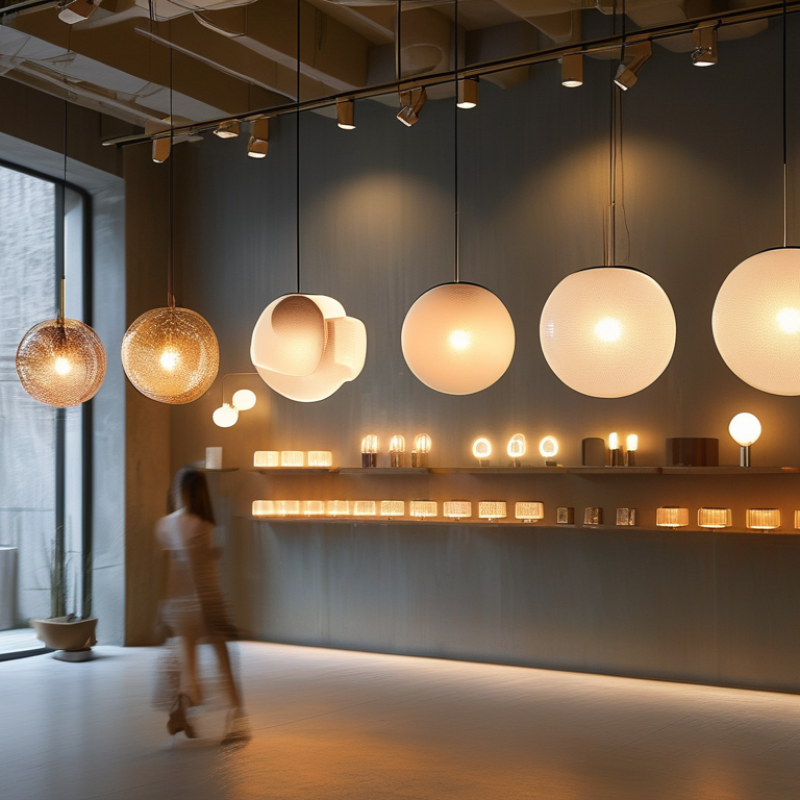
Global Lighting Gallery Market Overview and Buyer Priorities
Global lighting galleries are shifting from product display spaces to decision centers. The market now favors efficient, connected, and adaptable systems. The International Energy Agency reports that lighting uses about 15% of global electricity. This keeps energy performance central to buyer discussions. The U.S. Department of Energy also states that LED systems can use at least 75% less energy than incandescent lighting and last up to 25 times longer. Buyers increasingly examine total ownership costs, not only purchase prices.
Professional buyers often request photometric files, color consistency, warranty terms, and replacement availability. They also expect clear information about smart controls, dimming, emergency functions, and installation conditions. Certification matters across borders. A gallery should show products under realistic conditions, including warm residential light, bright retail light, and glare-sensitive office settings. The display must feel practical. Sometimes, however, galleries overuse dramatic lighting and hide ordinary weaknesses. That deserves more honest review.
Tips: Compare lumen output, beam angle, color rendering, and energy use together. Ask for verified test documents, not broad claims. Check spare-part access before approving large projects. Use sample installations when possible. A beautiful fitting may still perform poorly in a high-ceiling space. Global buyers should also examine local electrical standards, delivery risks, and maintenance skills before selecting a lighting collection.
| Market Dimension | Product or Buyer Priority | Practical Benchmark | Why It Matters to Global Buyers | Reference Basis |
|---|---|---|---|---|
| Light Source | LED adoption and replacement compatibility | LED products are preferred for new installations and retrofit projects because they provide high efficiency, long service life, instant operation, and flexible control options. | Reduces maintenance frequency and supports energy-saving targets across residential, hospitality, retail, office, and outdoor applications. | International energy-efficiency guidance and established LED product specifications |
| Energy Efficiency | Luminous efficacy | Typical modern LED luminaires commonly range from approximately 80 to 200 lumens per watt, depending on product type, optics, color quality, and operating conditions. | Higher efficacy can reduce installed wattage and operating costs, although glare control, color quality, and thermal performance must also be evaluated. | Common performance ranges used in contemporary LED lighting specifications |
| Service Life | Rated lifetime and maintenance planning | LED luminaires are frequently specified with rated lifetimes of 25,000 to 50,000 hours or more. Lifetime claims should identify the applicable lumen-maintenance criterion and operating temperature. | Helps buyers compare total cost of ownership rather than evaluating purchase price alone. | LM-80, TM-21, and L70-based lifetime evaluation practices |
| Color Quality | Color rendering index and application suitability | CRI 80 or higher is widely used for general lighting; CRI 90 or higher is commonly selected for retail, hospitality, residential, gallery, and visual-display environments. | Improves the appearance of products, materials, artwork, food, interiors, and skin tones. | CIE color-rendering principles and common international product specifications |
| Color Temperature | Correlated color temperature selection | Warm white is commonly represented by approximately 2700–3000 K, neutral white by approximately 3500–4100 K, and cool white by approximately 5000–6500 K. | Allows lighting galleries to present solutions for residential comfort, hospitality ambience, office productivity, retail presentation, and outdoor visibility. | CIE colorimetric terminology and standard lighting practice |
| Visual Comfort | Glare control and optical design | Buyers increasingly request diffusers, deep reflectors, shielding, low-glare optics, and UGR data where applicable. UGR values below 19 are commonly targeted for many office environments. | Reduces discomfort glare and improves suitability for workspaces, hospitality areas, showrooms, and customer-facing interiors. | CIE glare methodology and EN 12464-1 workplace-lighting practice |
| Smart Lighting | Dimming, sensing, and control compatibility | Common control requirements include 0–10 V dimming, DALI or DALI-2 compatibility, occupancy sensing, daylight harvesting, scheduling, and wireless control options. | Supports energy management, scene setting, automation, and integration with building-management systems. | IEC 62386 for DALI-based digital lighting control and established control-system practices |
| Ingress Protection | Indoor and outdoor durability | IP20 is generally used for protected indoor environments; IP44 provides protection against water splashes; IP65 provides dust-tight protection and resistance to water jets; higher ratings may be required for demanding locations. | Helps buyers match the luminaire to bathrooms, kitchens, façades, gardens, industrial spaces, and other moisture- or dust-exposed areas. | IEC 60529 ingress-protection classification |
| Electrical Safety | Voltage, frequency, and protection requirements | Global projects commonly require compatibility with regional mains systems, suitable power-factor performance, surge protection, insulation, grounding, and electromagnetic-compatibility compliance. | Reduces installation risk and supports approval across markets with different electrical infrastructures. | IEC 60598 luminaire safety requirements and applicable regional electrical regulations |
| Flicker and Temporal Light Modulation | Flicker-safe driver selection | Buyers increasingly request driver data for flicker percentage, flicker index, and PstLM or SVM where relevant, especially for workplaces, education, retail, and camera-sensitive environments. | Supports visual comfort and reduces potential problems with photography, video recording, rotating machinery, and sensitive users. | IEEE 1789 guidance and IEC TR 61547-1 measurement practices |
| Sustainability | Material efficiency and regulatory documentation | Common buyer checks include energy performance, replaceable components, recyclable materials, packaging reduction, product environmental information, and compliance with applicable substance restrictions. | Supports environmental reporting, responsible procurement, and compliance with destination-market requirements. | Applicable regional ecodesign, RoHS, REACH, waste, and product-compliance frameworks |
| Installation Flexibility | Mounting, modularity, and replacement convenience | Frequently requested features include surface, recessed, suspended, track, wall, and outdoor mounting options, together with interchangeable optics, drivers, trims, or modules. | Allows distributors and project buyers to serve different architectural conditions while simplifying stock planning. | Common architectural, commercial, hospitality, and outdoor lighting procurement requirements |
| Reliability and Warranty | Quality assurance and after-sales support | Buyers commonly request documented testing, batch consistency, driver reliability information, spare-part availability, and warranty terms aligned with the intended application and operating hours. | Improves project confidence and limits replacement, labor, and downtime costs. | IEC product-safety testing, photometric documentation, and standard commercial procurement practice |
| Photometric Data | IES or LDT files and verified performance | Professional buyers commonly require lumen output, wattage, beam angle, color data, luminous-intensity distribution, and IES or EULUMDAT/LDT files for lighting calculations. | Enables accurate layout design, compliance checks, energy calculations, and comparison between luminaires. | International photometric file formats and laboratory measurement practices |
| Note: Benchmarks are general international procurement references. Final requirements should be verified against the destination market, project type, local installation rules, applicable safety standards, and the latest product test reports. | ||||
Related Posts
-

The Definitive Ultimate Guide to Designing Your Perfect Lighting Showroom Experience
-
Transform Your Space: The Ultimate Guide to Sustainable Lighting Products for Eco-Friendly Homes
-
10 Best Lighting Showrooms: Transform Your Space with Style
-
10 Essential Tips for Creating the Perfect Lighting Showroom Experience
-

Advantages of Utilizing Tile Lighting for Global Buyers
-

Chinese Manufacturing Thrives Amidst Tariff Challenges: Spotlight on Best Lighting Products