What is a High Performance Flashlight and How to Choose One?
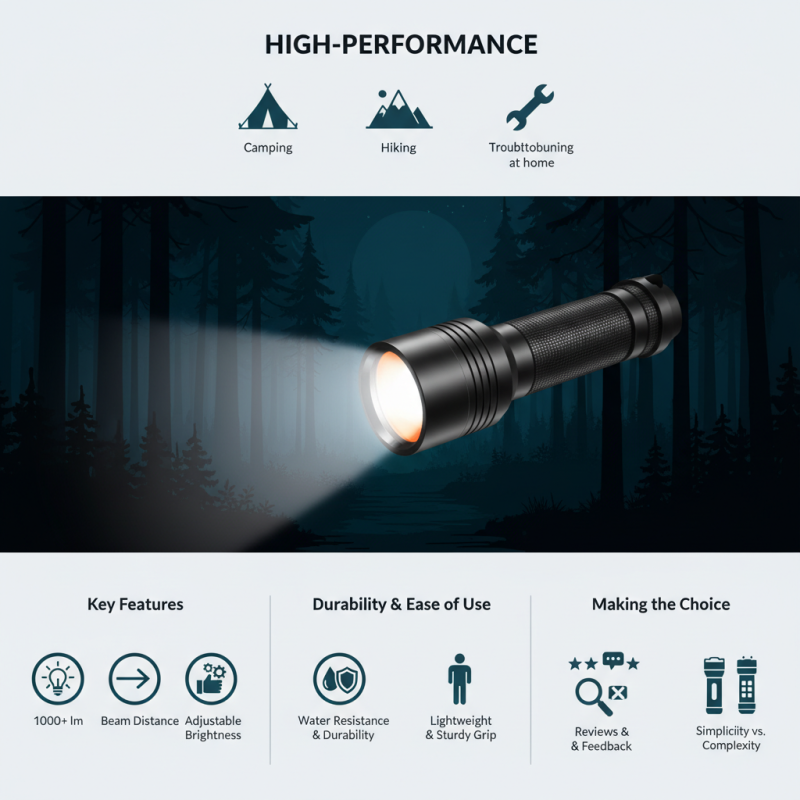
A High Performance Flashlight is not just a tool; it's a vital companion in various scenarios. Whether you are camping, hiking, or troubleshooting at home, choosing the right flashlight can significantly impact your experience. These flashlights deliver powerful illumination, often exceeding 1000 lumens. Their durability and battery longevity are key factors for outdoor enthusiasts who face harsh conditions.
When selecting a High Performance Flashlight, consider its brightness, beam distance, and ease of use. Look for features like adjustable brightness settings and water resistance. Details matter. A lightweight design makes it easy to carry, while a sturdy grip enhances safety. Yet, finding the ideal flashlight can be overwhelming.
Many products claim to be high performance, yet they may fall short in practice. Reviews and user feedback are essential to recognize any shortcomings. Be aware of flashy marketing; sometimes simplicity leads to the best results. A true high performance flashlight should meet your needs without complications. Reflect on what features are most critical for you.
What Defines a High Performance Flashlight in Today’s Market?
When defining a high-performance flashlight, several key factors come into play. Brightness is crucial; many flashlights now emit over 1,000 lumens. This intensity allows for longer-range visibility and greater clarity in dark environments. A well-made flashlight can illuminate objects up to 300 meters away. This is critical for outdoor enthusiasts or professionals in low-light situations.
Durability is another essential characteristic. Modern materials, such as aircraft-grade aluminum, ensure both resilience and lightweight design. Many high-performance models are also waterproof or impact-resistant. According to a recent industry report, around 30% of users prioritize durability when purchasing. A flashlight that can withstand rugged conditions will save costs over time.
Battery life is increasingly important in today’s fast-paced world. Many high-performance flashlights utilize lithium-ion batteries, offering longer usage times. Some advanced models can last for days on a single charge. Still, it’s vital to assess the balance between brightness and battery life. Excessive lumens can drain batteries quickly, leading to shorter operational times. Choosing the right flashlight requires careful consideration, as the performance should align with specific needs.
Key Features to Consider When Selecting a High Performance Flashlight
When selecting a high performance flashlight, there are several key features to consider. Brightness is essential. Look for lumens ratings that suit your needs. Higher lumens result in brighter light. However, too much brightness can sometimes be overwhelming. Think about where you’ll use it.
Battery life matters, too. A flashlight with a long-lasting battery saves you the hassle of frequently replacing it. Rechargeable options are often more eco-friendly. Yet, you may face issues when the battery runs out unexpectedly.
Be sure to assess the flashlight's durability. Waterproof and impact-resistant features extend its lifespan. You might not need these in a controlled environment, but outdoor use requires sturdiness.
Tips: Check the weight. A heavier flashlight might be harder to carry for long periods. Also, consider the beam distance. Sometimes, people overlook how far they need the light to reach. Finding the right fit is crucial, though. Not every feature will benefit you equally.
Understanding LED Technology: Lumen Output and Beam Distance Explained
When exploring high-performance flashlights, understanding LED technology is key. Lumen output is a critical factor. It measures the total light emitted by the flashlight. A high-output flashlight can exceed 1,000 lumens, which is bright enough to illuminate large areas. According to a report by the Illuminating Engineering Society, flashlights with over 500 lumens are considered powerful.
Beam distance also plays a significant role. This determines how far the light travels. Quality flashlights can project light over 300 meters, making them suitable for outdoor adventures. However, not all flashlights achieve their advertised beam distances. Real-world conditions, like fog or rain, can significantly affect performance.
Choosing the right flashlight involves balancing brightness, battery life, and size. A flashlight that is too large may not be practical for everyday carry. Conversely, a compact model may sacrifice power for portability. Users must also reflect on their needs. Do you require a flashlight for emergencies or nighttime hikes? Each scenario demands different features. It's essential to consider these factors before making a decision.
Battery Types and Their Impact on Flashlight Performance
Battery types significantly influence flashlight performance. There are mainly two types: alkaline and lithium-ion. Alkaline batteries are widely used due to their availability and cost-effectiveness. However, they typically offer lower energy density compared to lithium-ion batteries. A study shows that lithium-ion batteries can provide up to 70% more energy than alkaline. This energy advantage translates to longer run times.
Lithium-ion batteries also perform better in cold weather. Battery performance declines in low temperatures, but lithium-ion maintains functionality. In contrast, alkaline batteries may lose up to 50% of their capacity in frigid conditions. This can be crucial for outdoor activities in cold climates.
Charging times are another consideration. Lithium-ion batteries can be recharged multiple times, while alkaline are single-use. However, rapid charging can reduce lithium-ion lifespan. Proper management is key to maximizing performance. Many users overlook this, leading to subpar experiences. When choosing a flashlight, consider battery type carefully to match your needs.
What is a High Performance Flashlight and How to Choose One? - Battery Types and Their Impact on Flashlight Performance
| Battery Type | Voltage (V) | Runtime (Hours) | Lumens | Rechargeable |
| AA Alkaline | 1.5 | 3-10 | 100-300 | No |
| 18650 Li-ion | 3.7 | 1-25 | 300-1200 | Yes |
| CR123A Lithium | 3.0 | 2-20 | 150-1000 | No |
| C Rechargeable | 1.2 | 4-12 | 80-200 | Yes |
| D Alkaline | 1.5 | 10-50 | 300-1000 | No |
Durability Standards: IP Ratings and Material Choices for Flashlights
When choosing a high-performance flashlight, durability is key. One important aspect to consider is the IP rating, which indicates the flashlight's resistance to dust and water. For example, an IP65 rating means the flashlight is dust-tight and can withstand water jets. According to industry reports, flashlights with an IP68 rating can be submerged for extended periods, providing peace of mind in harsh conditions.
The materials used in flashlight construction also significantly affect durability. Aluminum alloys are popular due to their lightweight and robust nature, offering excellent resistance to impact. In contrary, cheaper plastic options can crack easily under stress. A 2022 market analysis revealed that products made from high-grade materials had a 30% longer lifespan than their cheaper counterparts.
Buying a durable flashlight is not just about the specs. It is essential to consider real-world applications. Users often overlook how the flashlight will be used. For instance, a flashlight meant for outdoor trekking should be more rugged than one for household use. Think about where you will take it. A little foresight can prevent disappointment later on.