


What Are the Best LED Neon Flex Types in 2026?
Choosing the best LED neon flex in 2026 is less about picking the brightest product and more about matching its construction to the job. A shop sign, curved display, and outdoor pathway place different demands on a flexible light. Small details matter: the direction it bends, its minimum bend radius, cut intervals, and how evenly it glows around corners.
This guide compares common options, including silicone and PVC jackets, top-bend and side-bend profiles, and single-color, RGB, and addressable versions. It also considers practical installation factors, such as voltage, power supply capacity, connectors, mounting channels, and protection ratings. A product’s IP rating can help indicate its resistance to dust and water, but it does not replace checking the manufacturer’s instructions for the intended setting.
Look beyond the product photos. Ask for the datasheet, confirm the operating voltage, and check whether replacement parts are available. Test a short sample before ordering for a long run. That matters. A strip may look smooth on a small display yet reveal uneven brightness or awkward joints when installed across a full storefront. No single type is best for every project, and product specifications can vary between manufacturers. The sections ahead explain how to compare these choices and spot trade-offs before they become costly installation problems.
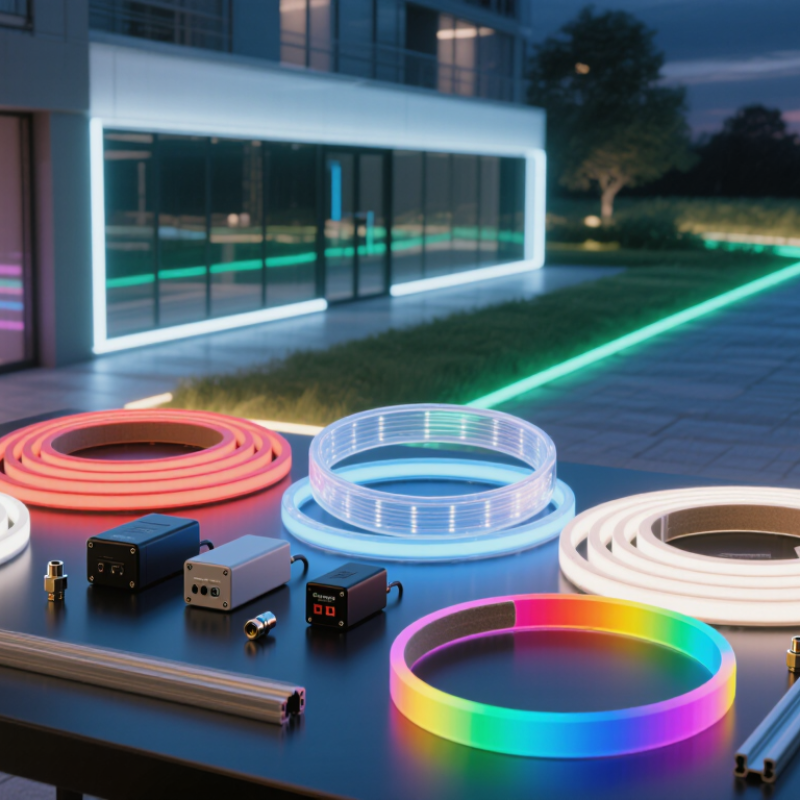
What LED Neon Flex Is and How It Produces Light
LED neon flex is a flexible strip of light designed to resemble the continuous glow of traditional neon. Inside its bendable casing, small light-emitting diodes sit along a circuit board. A translucent silicone or plastic diffuser spreads their points of light into a smoother line. It is not gas-filled glass tubing. The light comes from solid-state components.
When electricity flows through each LED, electrons release energy as visible light. A power supply typically converts household current to the lower-voltage direct current required by the strip. The diffuser softens the output, while the casing helps shield the LEDs from dust and accidental contact. Details vary: some products shine through the top, while others emit light from a side-facing surface. Check the product’s rated voltage and installation instructions before connecting it.
The result can be a clean outline around a mirror, sign, or counter edge. In person, the glow may look softer than a bare LED strip, though close inspection can still reveal bright spots. That depends on LED spacing and diffuser quality. Small detail. Heat, tight bends, and poor connections can shorten service life, so follow the specified bend radius and use compatible fittings. Flexible does not mean indestructible.
What Are the Best LED Neon Flex Types in 2026? — What LED Neon Flex Is and How It Produces Light
LED neon flex is a flexible lighting product that uses LEDs inside a shaped, light-diffusing jacket to create a continuous line of light. The best type depends on the required bend direction, color effects, installation conditions, and design.
| Type | How It Produces Light | Bending Direction | Typical Uses | Key Considerations |
|---|---|---|---|---|
| Single-color top-bend | Single-color LEDs shine through a translucent jacket, which diffuses the individual light points into a more continuous line. | Bends across the face of the light, usually in one plane. | Architectural outlines, signage, coves, and straight or gently curved runs. | Available in different colors and white color temperatures. Check the minimum bend radius and cutting interval for the specific product. |
| Single-color side-bend | LEDs and the diffuser are arranged to send light through the side-facing surface of the flex. | Bends sideways in one plane, around curves viewed from the side. | Letters, circular outlines, curved signs, and decorative contours. | Its bending direction differs from top-bend flex; confirm the intended orientation before designing the installation. |
| Three-dimensional bend | A flexible LED circuit and diffusing jacket produce a continuous-looking line while allowing movement in more than one direction. | Can bend in multiple planes, subject to the product’s specified limits. | Complex shapes, sculptural features, and routes that change direction in depth. | Not every product marketed as flexible supports unrestricted twisting. Follow its bend-radius and installation instructions. |
| RGB or RGBW | RGB versions combine red, green, and blue LED channels to create changing colors. RGBW versions add a separate white channel. | Depends on the chosen jacket and construction; top-bend and side-bend versions are available. | Color-changing signage, entertainment spaces, and programmable accent lighting. | Requires a compatible controller and power supply. RGBW can provide a dedicated white channel; color mixing and white quality vary by product. |
| Addressable (pixel) neon flex | Individually controlled LED sections or pixels create animated patterns and color sequences behind a diffuser. | Depends on the product’s physical construction and bend direction. | Animated displays, media features, and effects that change along the length of a run. | Requires a compatible data controller as well as suitable power. Confirm pixel spacing, control protocol, and maximum run guidance. |
| Mini or narrow-profile neon flex | Small LEDs inside a compact diffuser produce a slim, continuous-looking line of light. | Varies by model; narrow profiles may be designed for a specific bend plane. | Fine lettering, shallow channels, furniture details, and small-scale accents. | Compact products may have different brightness, heat, and mounting requirements from larger profiles. Check the product specifications. |
In most LED neon flex, electrical power drives semiconductor LEDs, which emit light; the surrounding jacket spreads and shapes that light to soften visible points. Voltage, power consumption, brightness, cut length, ingress protection, and suitability for indoor or outdoor use vary by product, so verify the technical datasheet before installation.