2026 Best Concert Lighting Systems for Live Events
Choosing the 2026 best concert lighting systems means looking beyond brightness and fixture counts. A dependable rig must shape the music, support performers, and adapt to the venue. Think of a vocalist crossing a dark stage, then a warm beam finding them without washing out the backdrop. Small choices like that can make a show feel intentional. They can also go wrong.
Veteran concert lighting designer Patrick Woodroffe has shaped major live productions for decades. A concise paraphrase of his design approach is: “Let the light serve the music, not compete with it.” This is a paraphrase, not a verified verbatim quotation. It points to a practical test for any system: can the crew create clear, expressive looks while keeping setup and operation manageable? That matters in clubs, arenas, and festivals alike.
This guide compares systems through real-world considerations: fixture output, color quality, control options, portability, and service support. It also considers how rigs handle haze, tight stage plots, and quick changeovers. Specs matter. So does the person programming them. No system is perfect. A powerful fixture may be too heavy for a touring crew, while a compact package may lack reach in a wide venue. The right choice depends on the production, budget, and people operating it. There is room for judgment—and for reconsidering a choice after the first show.
Concert Lighting System Types: Moving Heads, LED Washes, Blinders, and Lasers
2026 Best Concert Lighting Systems for Live Events
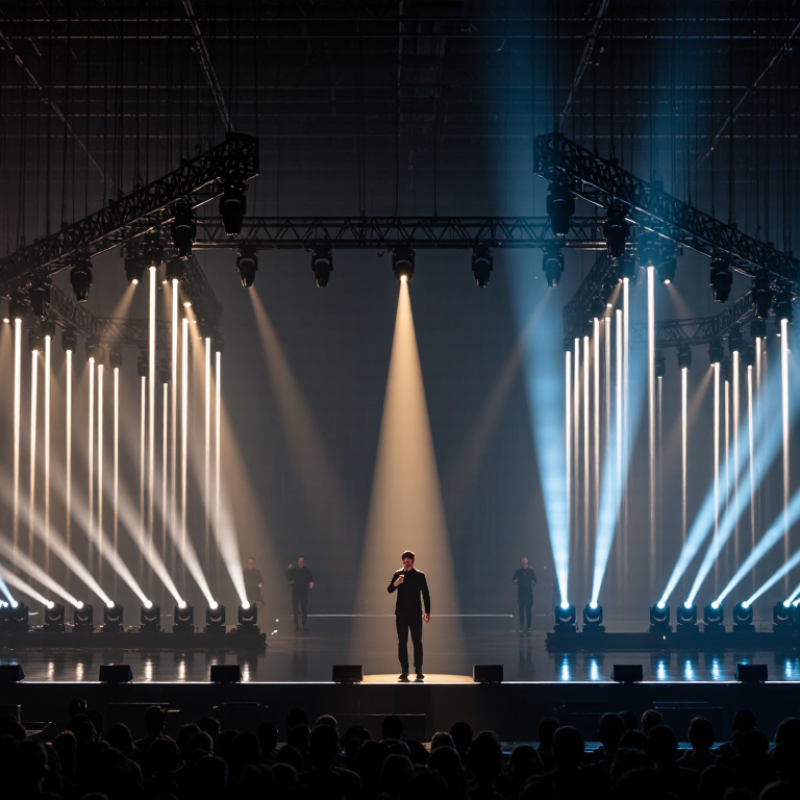
Concert lighting works best as a set of distinct tools, not one fixture doing everything. Moving heads add motion, shape, and focused beams; use them to pick out a singer or draw a slow sweep across a back wall. LED washes create broad, even color on performers and scenery. Blinders deliver brief, audience-facing bursts, so cue timing matters. Lasers can add crisp geometry, but require trained operation and a venue-approved beam plan. Small rooms differ.
Power and heat deserve attention, too. The U.S. Department of Energy’s LED lighting guidance reports that LEDs use at least 75% less energy and can last up to 25 times longer than incandescent lighting. Those figures describe LED products generally, not a guarantee for every concert fixture. Still, they help explain why LED washes can ease power planning and reduce relamping. Check actual fixture specifications, including output, color quality, noise, and cooling needs. A bright beam can look thin in haze; a wash may reveal uneven color on a white backdrop. I would not assume more fixture types mean a better show. A restrained rig, carefully focused, can look stronger than a crowded one.
2026 Best Concert Lighting Systems for Live Events
Concert Lighting System Types: Moving Heads, LED Washes, Blinders, and Lasers
The bars show indicative low-to-high electrical input ranges in watts for individual fixtures or systems. Actual requirements vary by size, design, and operating mode; these ranges are for early planning, not product specifications. Laser optical output is measured separately from electrical input, and laser use requires appropriate safety controls.
Performance Metrics: Illuminance, Beam Angle, Color Quality, and IP Rating
For a concert system, illuminance should be measured where light is needed, not only beneath the fixture. Check lux at the performer’s mark, the front rows, and the back of the stage. At a 10-meter throw, a bright center may still leave faces dim. Record readings at several points; uneven coverage can matter more than a high peak value. Numbers can mislead.
Beam angle determines how that output spreads. A narrow beam can cut through haze and isolate a soloist, but it may create harsh hot spots. Wider beams cover dancers or stage scenery with fewer fixtures, though they lose intensity over distance. Test the planned angles from the actual mounting height. A mock-up often reveals gaps that a drawing misses.
Color quality affects skin tones, costumes, and camera images. Look beyond a single CRI figure when possible; TM-30 data can show color fidelity and saturation more clearly. Check colors on performers under the intended mix, since deep saturated hues can reduce usable output. For outdoor events or damp locations, match the IP rating to likely exposure, including rain and dust. An IP rating does not guarantee safe operation in every condition, and connectors need suitable protection too. Test it live. I’d still leave room for adjustment: venue surfaces and audience sightlines rarely behave exactly as expected.
Control Networks: DMX512 Supports 512 Slots per Universe
A DMX512 universe carries 512 control slots, not 512 fixtures. ESTA’s ANSI E1.11-2008 (R2018) standard defines the protocol’s packet structure: a start code followed by up to 512 data slots. The standard specifies a 250 kbit/s data rate. Fixture profiles use different numbers of slots, though. A simple dimmer may need one, while a moving fixture can require dozens. That limit matters.
For a live rig, count slots before planning the patch. Twelve fixtures using 30 slots each need 360 slots; six effects units using 24 slots each bring the total to 504. Almost full. Leave room for changes, such as added color controls or replacement fixtures with larger profiles. Check each fixture’s published DMX profile, rather than relying on a console’s simplified view. A channel map can look precise and still miss a profile change. I would verify it against the actual fixture list before show day. It is not elegant, but it can catch a crowded universe before setup gets hectic.
System Selection by Venue Size, Rigging Capacity, Power, and Redundancy
A concert lighting system should fit the room, not just the stage plot. In a 200-seat club, compact fixtures and a few carefully aimed beams can cover performers without blinding the first rows. Larger halls need wider coverage, more control zones, and enough output to remain visible against video screens. More fixtures are not automatically better. They add weight, heat, cabling, and setup time.
Check rigging capacity before choosing fixture positions. A lighting plot must account for trusses, motors, cables, and the weight of every attached unit. Ask the venue for documented load limits; do not estimate from appearance. Power deserves the same attention. Calculate each circuit’s expected load, including startup behavior, and leave headroom for practical surprises. A crowded distro can turn a simple changeover into a delay.
Redundancy matters when the show cannot pause. Keep spare data paths where feasible, label power runs clearly, and identify which fixtures are essential to safe stage visibility. A backup console may help, but only if it is configured and tested before doors open. Small systems can still benefit from a written fallback plan. It is easy to overlook this during a fast load-in. Walk the rig with the venue crew, verify focus from the audience area, and record any compromises for the next event.
Safety Standards: IEC 60598 for Luminaires and IEC 60529 for IP Ratings
Concert lighting must look dramatic without creating electrical or thermal hazards. IEC 60598 covers safety requirements for luminaires, including construction, wiring, insulation, and temperature limits. The relevant part depends on the fixture type, so check its documentation rather than assuming one test applies to every unit. A compliant luminaire is only one part of a safe rig. Cables, mounting hardware, power distribution, and installation practices matter too.
IEC 60529 classifies protection against solid objects and water using an IP code. The first digit indicates solids protection; the second indicates water protection under specified test conditions. For example, an outdoor fixture’s rating does not automatically protect its connectors or cables. Rain, spray, dust, and condensation can reach exposed parts during setup. Check the complete installation and follow the manufacturer’s stated limits. Do not treat an IP rating as a promise of protection in every environment.
Tips: Before each event, inspect housings, seals, and cable entries for cracks or wear. Match fixture ratings to the actual location, and keep test documents accessible. Small details matter. If conditions differ from the specified tests, pause and reassess the setup.